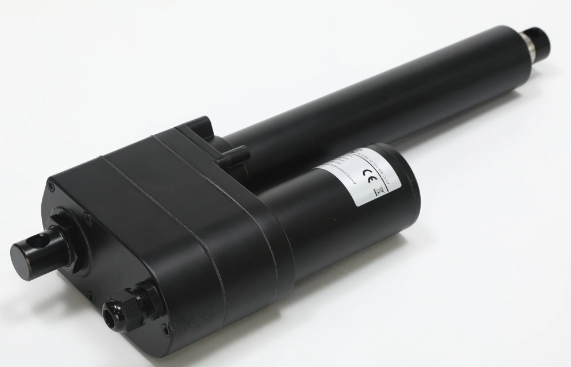
Introduction to Electric Linear Actuators
An electric linear actuator is an electromechanical device mainly composed of a motor, a set of gears, and a motion mechanism in the form of a worm and tube. It converts the motor’s rotary motion into linear motion by driving the gears and worm gear.
It can be integrated into any equipment to push, pull, lift, lower, position or orient a load.
Electric linear actuators are an integral component of modern engineering and automation systems, providing precise and controlled linear motion in various applications. These devices have evolved over the years, finding their way into industries like manufacturing, robotics, automotive, healthcare, and even in our everyday lives. In this extensive exploration, we will delve into the world of electric linear actuators, understanding their mechanisms, types, applications, benefits, and future prospects.
Mechanisms and Working Principles
Electric linear actuators employ various mechanisms and working principles to achieve linear motion. The choice of mechanism often depends on the application's specific needs. Here are some common mechanisms:
Screw Mechanism: Screw driven electric linear actuators consist of a threaded rod and a nut that moves along the threads. When the motor rotates the rod, it causes the nut to move linearly. The direction and speed of motion depend on the motor's rotation.
Belt or Chain Mechanism: In these actuators, a belt or chain is looped around pulleys or sprockets, and a motor drives one of these pulleys. As the motor rotates, the belt or chain moves, providing linear motion.
Linear Motor Mechanism: waterproof linear actuator uses the principles of electromagnetic induction to generate motion. A coil is placed within a magnetic field, and when current flows through the coil, it experiences a force that propels it along a linear path.
Piezoelectric Mechanism: Piezoelectric actuators utilize the piezoelectric effect, where certain materials deform when subjected to an electric field. This deformation is harnessed to produce linear motion.
Types of Electric Linear Actuators
Ball Screw Actuators: Ball screw actuators use a screw mechanism with ball bearings to reduce friction and enhance precision. They are suitable for applications that require high accuracy and efficient energy transfer.
Lead Screw Actuators: Lead screw actuators function similarly to ball screw actuators but use sliding contact instead of rolling contact, making them less efficient but more cost effective.
Belt Driven Actuators: Belt driven actuators are known for their quiet operation and high speeds. They are often used in applications like 3D printing and scanning systems.
Rack and Pinion Actuators: These actuators use a rack and pinion mechanism for linear motion. They are particularly suited for heavy duty applications.
Linear Motor Actuators: Linear motor actuators offer high precision, fast response times, and excellent control. They are commonly used in semiconductor manufacturing and precision machining.
Piezoelectric Actuators: Piezoelectric actuators are characterized by their rapid response and sub micron precision. They are widely used in applications like nanopositioning and microscopy.
Each type of electric linear actuator has distinct characteristics that make it suitable for specific applications, whether they require high precision, speed, or heavy load bearing capabilities.
Applications in Different Industries
Manufacturing and Industrial Automation: small electric actuator is employed in manufacturing machinery, including CNC machines, 3D printers, and conveyor systems. They facilitate precise positioning, material handling, and assembly processes.
Robotics: Robotics applications utilize electric linear actuators for precise and controlled movement. These actuators are integral to robotic arms, grippers, and motion systems.
Automotive: In the automotive industry, small electric actuator is used in power seat adjustments, power windows, and various control systems. They enhance comfort and functionality in vehicles.
Healthcare: Electric linear actuators are crucial in medical devices, such as hospital beds, patient lifts, and diagnostic equipment. They provide smooth and adjustable motion for patient care and diagnostics.
Aerospace: Electric linear actuators are employed in aircraft for functions like wing flap adjustments and landing gear control. They offer reliability and precision in critical aviation systems.
Home Automation: Electric linear actuators are used in home automation systems, such as smart TVs and home theater systems. They enable automatic adjustment of viewing angles and screen positions.
Agriculture: Electric linear actuators are utilized in farming equipment, such as automated feeding systems and irrigation controls. They enhance the efficiency of agricultural processes.
Why are linear actuators so expensive?
People argue about the price of a linear actuator. While certain actuators may appear to be economical, it's essential to recognize that you typically receive a product commensurate with the investment. Take, for instance, our classic linear actuator featured above. It's worth noting the multitude of components necessary for constructing a high quality actuator like this. The fabrication of a linear motion control device of this caliber demands over 100 components, a process that entails both time and financial expenditure. Opting for cost cutting measures, such as substituting a bearing with a brass bushing or omitting essential O rings, may seem like a way to reduce expenses, but it ultimately results in a subpar actuator with a limited lifespan. Consequently, the pricing of linear actuators is influenced by their intricate electro mechanical nature, the multitude of moving parts involved, and the quality of the materials used in their construction.
Exemplary Precision and Accuracy: Linear actuators are engineered to achieve exceptional precision and accuracy in their movements, ensuring they adhere precisely to the intended path. Achieving this level of performance necessitates the use of top tier materials and meticulous manufacturing processes, elements that contribute to heightened production costs.
Intricate Design Complexity: Certain linear actuators boast intricate designs replete with numerous components, including precision motors, gears, and bearings. The fabrication and assembly of each of these components demand a high degree of precision to guarantee the smooth operation of the actuator, thereby adding to the overall cost.
Tailored to Specialized Applications: Linear actuators frequently find application in specialized industries, such as robotics, medical devices, and aerospace equipment. These sectors necessitate the integration of high quality sensors and electronic components within the actuators, further driving up the cost of production to meet stringent industry standards.
Limited Production Volumes for Customized Needs: Linear actuators are not mass produced, as they are primarily employed in bespoke and specialized applications. This limited production volume restricts the advantages of economies of scale and, in turn, elevates the per unit cost of these precision devices.
KUKE insists on supplying only original electronic components, such as high quality waterproof linear actuator. If you have any question, please contact KUKE immediately.

 English