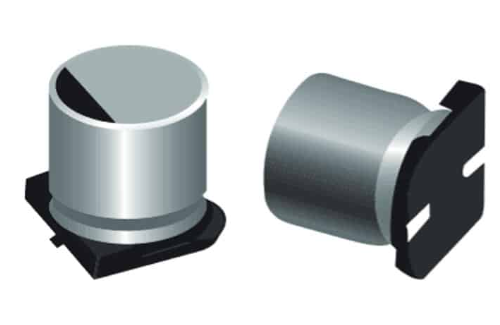
In the application of new technology, polymer capacitors play an important role. In the emerging era, many companies are dedicated to making significant strides through novel applications and actively delving into the possibilities of miniaturizing GaN based AC/DC converters.
AC/DC converters find application in diverse electronic products, serving as devices that transform standard AC power into DC power. Their significance arises from the fact that a majority of electric loads operate on DC voltages rather than AC voltages. The size of AC/DC converters varies based on the power level demanded by the hardware. In terms of space efficiency and portability, smaller-sized converters are preferable, offering advantages in terms of saving space and facilitating easy portability, especially when compared at similar power levels.
The exceptional characteristics of GaN find a perfect match with polymer capacitors, showcasing excellent performance in practical application scenarios to fulfill customers' requirements for enhanced performance. The specific features of these capacitors are detailed below.
Small Size: GaN significantly contributes to the miniaturization of AC/DC converters.
Typically, circuits utilize DC voltage over AC voltage, and AC/DC converters play a vital role in converting commercial AC power supply into DC power. Given the same power output, the trend toward miniaturization of converters becomes imperative for space saving and improved portability.
In contrast to traditional Si (silicon) components, GaN offers several advantages, including smaller switching losses, increased efficiency, higher electron migration speed, and enhanced conductivity.
These advantages empower AC/DC converters to execute switching operations with greater precision, leading to more efficient energy conversion. Furthermore, the option to choose higher switching frequencies becomes viable, allowing the use of smaller passive components. This is attributed to GaN's ability to maintain excellent efficiency even at higher switching frequencies, surpassing the efficiency provided by Si at lower switching frequencies.
Low ESR: Ripple voltage is always generated when the capacitor absorbs the ripple current.
The significance of output capacitors cannot be overstated. Polymer capacitors play a crucial role in minimizing output voltage ripple and serve as essential components in filtering high power switching circuits.
In practical applications, polymer cap is often imperative to ensure that the ripple voltage does not exceed 1% of the operating voltage of the device.
Within the frequency range of 10KHz to 800KHz, the Equivalent Series Resistance (ESR) of hybrid capacitors remains stable, effectively meeting the demands of high frequency switching in GaN applications. Consequently, in GaN based AC/DC converters, polymer capacitors emerge as the optimal solution for output requirements.
As the utilization of high frequency switching AC/DC converters continues to rise, there is a growing need to meet evolving customer demands. With its cutting edge high performance and high reliability technology, the market is introduced to an innovative and comprehensive product lineup by addressing voltages up to 100V.
Advantages of Polymer Capacitors
By assimilating the ripple current from the AC/DC converter, the output capacitor plays a crucial role in providing a smooth DC current output to the following circuit. The generation of ripple voltage is inevitable as the capacitor absorbs the ripple current. During the design verification phase, it is imperative that this ripple voltage remains within specified limit values to ensure the safe operation of the application, typically staying below ±5% of the output voltage.
The primary determinant for achieving minimal ripple in a DC output voltage is the impedance of the capacitor. The fundamental relationship is expressed as ripple voltage = ripple current x impedance (ΔV=ΔI*Z). Therefore, the ideal approach is to employ capacitors with the lowest possible impedance at the switching frequency, where ripple current occurs.
With GaN technology, it becomes feasible to operate at higher switching frequencies, such as 200k-500kHz, owing to the reduced switching loss compared to conventional Si technology, which typically operates at 100kHz. In this elevated frequency range, polymer capacitors exhibit significantly lower impedance than the traditionally used liquid electrolytic capacitors. Consequently, polymer capacitors have the capacity to more effectively diminish ripple voltages, making them increasingly favored as the optimal output capacitors for AC/DC converter designs utilizing GaN.
The low impedance of polymer capacitors is achieved by employing a conductive polymer material with low Equivalent Series Resistance (ESR) as the electrolyte. The reduced ESR not only signifies improved performance but also enables these capacitors to withstand higher levels of ripple currents compared to electrolytic capacitors.
Furthermore, the solid electrolyte nature of conductive polymer, as opposed to the liquid electrolyte in traditional capacitors, ensures that the capacitor's characteristics remain stable even in low-temperature environments and during prolonged exposure to high temperatures. These advantages associated with polymer capacitors make significant contributions to various aspects of customer designs.
Flexible Options: Polymer solid aluminum electrolytic capacitors, polymer hybrid capacitors, MLPC, and polymer tantalum capacitor series can be efficiently matched with the new AC/DC converters.
These polymer capacitors find extensive use in various applications, including 5 20V outputs for industrial equipment, 24V outputs, and 48V outputs for network equipment. Addressing the recent power shortage challenges necessitates achieving higher efficiency.
The growing transition of products to 48V, spanning automotive, data centers, USB PD, and more, highlights an increasing demand for GaN and polymer capacitors. This expansion broadens the scope of applications for these technologies.
In conclusion, opting for Polymer E CAP in GaN based AC/DC Converters ensures unparalleled performance, durability, space optimization, and access to industry leading expertise. These factors are crucial considerations when selecting the most suitable component to meet your application needs.
In the near future, achieving a sustainable society amidst the rising number of electronic devices and increased power consumption is anticipated to drive a growing adoption of GaN technology. This is primarily due to the crucial need for downsizing power supplies (leading to resource conservation) and enhancing efficiency (resulting in energy savings).
GaN is not limited to its utilization in the AC/DC converters highlighted in this article; its application extends to a broader spectrum, encompassing high-voltage DC/DC converters, base station RF amplifiers, and various other domains. The versatility of GaN positions it as a key player in addressing the demands of power efficiency and resource conservation across a range of applications.
KUKE will continue to strive to meet customer needs as electronic components that can contribute to new generation power supplies, such as high quality tantalum polymer capacitor. If you have any question about polymer tantalum, please contact KUKE immediately.

 English