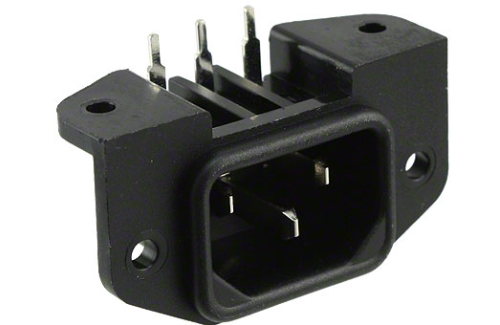
In recent news, a company has released a new line of locking field termination power connectors. The IEC C13 connectors, adhering to standard specifications, serve as a reliable power source for various components. They facilitate swift and straightforward field installations, minimizing downtime, and securely lock in place to avert inadvertent disconnections.
These universally sized locking field termination power connectors are proving beneficial for a diverse range of users, including field technicians, IT managers, resellers, home users, and office IT maintenance personnel. Conforming to the standard IEC C13 dimensions, they carry a rating of 10 amps and 250 volts, making them versatile for powering computers, monitors, displays, printers, scanners, servers, networking equipment, medical devices, audio and video equipment, lab machinery, industrial equipment, and more.
This innovative power connectors become invaluable when faced with a malfunctioning power connector, ensuring a swift reconnection with minimal delays. Featuring screw down terminals, they enable field installations on existing cables without the necessity for specialized tools or expertise, eliminating the need for soldering; only a Phillips head screwdriver is required.
Moreover, these locking field term power connectors offer an added advantage by incorporating a locking mechanism that remains secure despite cord movement, vibrations, or accidental bumps and kicks, particularly in high traffic areas.
For enhanced flexibility, these locking field term power connectors are available in three distinct form factors: a standard straight plug, along with right angle and downward angle plugs, catering to installations in confined spaces.
AC Power Connectors Information
AC power connectors play a crucial role in transmitting alternating current across a diverse array of electronic devices, finding application in commercial, industrial, and residential settings. These connectors span a spectrum from basic AC inlets and outlets to advanced power entry modules that integrate the functionalities of multiple electrical components into a single device. For instance, certain power entry modules not only serve as connectors but also function as switches, fuses, filters, circuit breakers, and indicator lights, showcasing the versatility and complexity inherent in AC power connector technology.
Specifications
AC Power Connectors: Diversity in Gender, Grounding, and Configuration Standards.
Plugs/Inlets are male connectors featuring socket contacts. Plugs connect to electrical receptacles, wall outlets, or sockets, drawing current from these female connectors.
Receptacles/Outlets (Jacks) are referred to as jacks, receptacles are the female connectors that mate with male plugs. Male connectors, such as plugs, insert into female connectors like outlets and jacks.
Standard AC power connectors for computers, for example, typically have three prongs, with the third prong serving as the ground. They exhibit both a male end and a female end. The female end plugs into the computer, monitor, or other peripherals, while the male end plugs into a surge protected wall outlet.
Grounding
Ground Fault Interruption Indicators: Ensuring Electrical Safety.
Non Grounding Connectors: These ac connectors lack a ground option, emphasizing simplicity.
Standard Grounding Devices: Equipped with a standard embedded ground terminal, these devices ensure a reliable grounding connection.
Isolated Grounding Devices: These devices employ a ground path isolated from the facility's grounding systems. This not only enhances the resistance of sensitive electronics to surges but also offers a clear grounding path to the service panel, reducing electromagnetic noise that can interfere with equipment operation.
Self Grounding Connectors: These connectors establish a connection to an existing grounding path, such as a metal wiring device, metal conduit, gas or water pipe, or structural steel, simplifying installation.
In addition to these grounding options, Ground Fault Circuit Interrupter (GFCI) connectors are equipped with a built in circuit designed to detect leakage current to ground on the load side of the device. When such leakage is detected, the GFCI interrupts power, preventing potentially hazardous ground fault conditions. Compliance with the National Electric Code NFPA-70 mandates the use of GFCIs in numerous indoor and outdoor locations, further ensuring electrical safety.
Mounting
Jam Nut Receptacles: Specifically designed for "D" shaped holes, jam nut receptacles offer a secure fit in these unique configurations.
Cable End Connectors: Tailored for the ends of electrical cables, these connectors provide a reliable connection point for cable termination.
In Line or Cable Receptacles: Ideal for panel cutouts, in-line or cable receptacles seamlessly integrate into panel configurations.
Flange Mounted Connectors: Attached to panels either by bolting the flange or riveting it in place through two holes, flange mounted connectors are commonly used for wall or box receptacles. They are threaded through an accessory before mounting.
Solder/Weld Mount Receptacles: Designed for permanent mounting, these receptacles are suitable for higher-pressure systems. End launch connectors are soldered to the end or edge of printed circuit boards, while PC mount connectors are soldered into pre-drilled holes.
Surface Mount Connectors (SMT): Requiring soldering but not pre-drilled holes, SMT connectors add components to a printed circuit board (PCB) by soldering component leads or terminals directly to the top surface of the board. SMT involves coating the PCB pad with a solder and flux formulation, ensuring careful placement of components that are then soldered to the PCB pads when exposed to elevated temperatures, typically from an infrared oven.
Terminals
Cage Clamps:
Minimal wire preparation and no specialized tools are required for cage clamps.
Installation of the terminal is cost-effective, providing a high level of security.
Crimp Connections:
Crimping involves physically compressing a contact wire barrel around a conductor to establish an electrical and mechanical connection.
Precise crimping ensures a constant contact resistance, offering an inexpensive and corrosion free connection through cold weld action.
Screws:
Electrical termination using screws requires less space and no special tools.
Lugs:
Lugs are terminals suitable for crimping to large gauge cables and bolting to power or grounding sources.
Quick Release Tabs:
Quick release tabs facilitate rapid connection and termination.
Wire Wraps:
Wire wraps involve making electrical connections by wrapping a stripped or unstripped solid wire around a terminal post equipped with sharp edges. This solderless process necessitates a special wrapping tool.
Insulation Displacement Connectors (IDC):
IDCs slice through cable insulation, creating a connection by displacing the insulation when an insulated conductor is forced into a restrictive slot. Ideal for mass termination of flat cables, IDCs eliminate the need to strip insulation.
Solder Pin or PCB Solder Termination:
Electrical connections in solder pin termination involve soldering wires (pins) onto a printed circuit board (PCB).
Solder cups are terminal ends where conductors are inserted before soldering, typically using a 60-40 rosin core (60% tin and 40% lead) for soldering electronic assemblies.
Through Hole Termination:
Through hole termination connects components mounted on PCBs by inserting component leads through holes in the board and then soldering.
Pin Termination:
Components in pin termination are mounted on boards without soldering, offering an alternative approach to secure connections.
KUKE insists on supplying only original electronic components, such as high quality ac dc connector. If you have any question, please contact KUKE immediately.

 English