As a photoelectric conversion device, optocoupler relays provide significant support for the development of optoelectronic integration technology. They enable the mutual conversion of electrical and optical signals, acting as a bridge in the interconnection and application of semiconductor devices. For instance, in some complex electronic systems, there may be mismatches in signal levels, current magnitudes, etc., between different modules. Optocoupler relays can convert input signals to make them compatible with the requirements of the output circuit. In this article, you will gain a deeper understanding of optocoupler relays.
Optocoupler Relay Basic
Basic Structure
A optocoupler relay is a device that combines photocoupling technology with relay functionality. It is primarily composed of a photocoupling device and an electronic switch, making it a type of solid-state relay. For its structure, it mainly includes a light source (usually a light-emitting diode, or LED) and a light receiver (usually a phototransistor or a photothyristor). These two components are encapsulated within the same case, separated by a transparent insulating medium, thereby achieving electrical isolation.
For example, a common type of optocoupler relay has its LED and phototransistor positioned opposite each other. When the LED emits light, the light can directly illuminate the base region of the phototransistor.
Working Principle
When a suitable forward voltage is applied to the input side of the optocoupler relay (the LED side), the LED will conduct and emit light. This light signal will be received by the light receiver. For example, in the case of a phototransistor, upon receiving the light signal, the PN junction between the base and emitter will generate photocarriers. These carriers increase the base current of the transistor. According to the amplification principle of the transistor, the collector current will increase with the base current, causing the phototransistor to conduct and achieving the conversion from a light signal to an electrical signal. This allows the on/off state of the output side circuit to be indirectly controlled by regulating the current through the input side LED.
How to Wire A Photocoupler Relay?
The wiring steps for an optocoupler relay mainly include the following steps:
1. Determine the wiring positions: First, identify the input and output terminals of the optocoupler relay. The input terminal is used to receive the control signal, while the output terminal is connected to the circuit being controlled.
2. Connect the input signal: Connect the positive terminal of the control signal to one end of the input terminal of the relay, and the negative terminal to the other end of the input terminal, ensuring the correct polarity so that the control signal can be correctly transmitted to the relay.
Connect the output load: Connect the positive and negative terminals of the controlled circuit to the two ends of the relay's output terminal, ensuring the correct polarity so that the optocoupler relay can properly control the output load when it receives the control signal.
Connect the power supply: For certain types of optocoupler relays, an additional power supply may be required. Depending on the model and specifications of the relay, connect an appropriate power supply, and pay attention to the polarity and voltage range of the power supply.
Precautions:
1. Insulation: During the wiring process, ensure that all operations are performed in a de-energized state, maintain good insulation, and avoid short circuits or electrical leakage.
2. Inspection: After completing the wiring, be sure to conduct a thorough inspection to confirm that all connections are correct. You can use a multimeter to perform a continuity test to ensure the circuit is properly connected.
3. Cleanliness: Keep the wiring area clean to prevent dust or debris from entering and affecting the normal operation of the circuit.
By following the above steps and precautions, you can correctly wire a optocoupler relay and ensure the normal operation of the circuit. In actual applications, it is also necessary to adjust the wiring method appropriately according to the specific situation to avoid unnecessary problems.
Why Optocoupler Relay is Important?
Safety Isolation Function: In many electronic systems, it is necessary to isolate circuits with different voltage levels or circuits that may contain sources of interference. The electrical isolation characteristic of optocoupler relays can prevent faults in one circuit (such as short circuits, overvoltage, etc.) from affecting other circuits. For example, in an electrical device that includes both high-voltage (such as 220V AC mains power) and low-voltage (such as 5V DC control signals), an optocoupler relay can isolate the high-voltage circuit from the low-voltage circuit, preventing damage to the low-voltage control section due to high-voltage faults.
Signal Matching and Control: Optocoupler relays can achieve signal matching and flexible control. In some complex circuit systems, there may be mismatches in signal levels, current magnitudes, etc., between different modules. What’s more, they can convert the input signal to meet the requirements of the output circuit. For example, in a system where a microcontroller controls a high-power load (such as a motor), the microcontroller outputs a low-level, low-current digital signal. Through an optocoupler relay, this signal can be converted into a suitable signal that can drive the motor to start and stop.
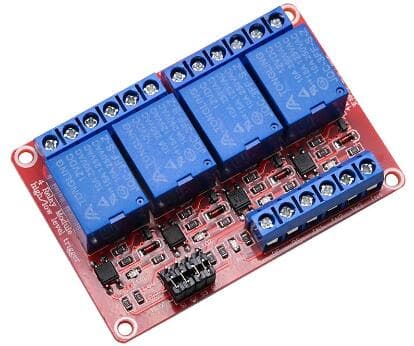
Optocoupler Relay vs. Traditional Relay
Size and Power Consumption:
Traditional relays usually have a large mechanical structure, including components such as coils, cores, and contacts, making them relatively bulky. In contrast, optocoupler relays are primarily composed of semiconductor devices, making them compact. For example, a small electromagnetic relay might have a size of several cubic centimeters, whereas an optocoupler relay can be even smaller, potentially fitting within a few cubic millimeters.
The coils of traditional relays consume a certain amount of electrical energy during operation, especially when they need to maintain a closed state for an extended period, resulting in higher power consumption. The power consumption of optocoupler relays mainly depends on the current through the LED, which is generally relatively low, in the milliampere range, allowing them to perform better in applications where power consumption is a critical concern.
Response Speed:
Traditional relays have relatively slow response speeds due to their mechanical moving parts (such as the opening and closing of contacts), typically in the millisecond range. For example, the pull-in time of a typical electromagnetic relay might be around 5-10 ms. Optocoupler relays, based on the principle of photoelectric conversion, have no mechanical moving parts and thus have very fast response speeds, usually reaching the microsecond range, which can meet the requirements for high-speed signal control.
Lifespan:
The contacts of traditional relays experience wear and tear during frequent opening and closing operations and are susceptible to the effects of arcing, which limits their lifespan. For example, some ordinary electromagnetic relays may have a mechanical lifespan of only a few hundred thousand operations under frequent operation (such as several times per second). Photocoupler relays do not have mechanical contacts, eliminating the issue of contact wear. As long as the internal optoelectronic components function properly, their lifespan can be very long, generally reaching millions of operations or more.
Table 1: Optocoupler Relay vs. Traditional Relay
|
Specifications
|
Optocoupler Relay
|
Traditional Relays
|
|
Structure
|
• Optocoupler (including LED and photosensitive element)
• Electronic switch (such as a thyristor or MOSFET)
• Control circuit and protection circuit
|
• Coil
• Core and Armature
• Mechanical Contacts
• Spring and Other Mechanical Components
|
|
Working Principle
|
• The input signal drives the LED of the optocoupler to emit light.
• The photosensitive element of the optocoupler receives the light signal and conducts, driving the internal electronic switch.
• The electronic switch controls the on/off state of the load circuit.
|
• The input signal passes through the coil, generating a magnetic field.
• The magnetic field attracts the core, moving the mechanical contacts.
• The contacts close or open, controlling the on/off state of the load circuit.
|
|
Pros & Cons
|
Advantages:
• No mechanical wear: Long lifespan due to the absence of mechanical contacts.
• High-speed response: Fast switching speed, suitable for high-frequency applications.
• Electrical isolation: Complete isolation through light signals, strong anti-interference capability.
• Low noise: No mechanical movement, therefore no noise.
Disadvantages:
• Higher price: Due to the complexity of the internal electronic components, the cost is higher.
• Power limitation: Not suitable for high-power load applications, limited by the carrying capacity of the electronic switch.
|
Advantages:
• Wide applicability: Suitable for both high-power and low-power loads.
• Lower price: Simple structure, low manufacturing cost.
• Physical disconnection: Mechanical contacts disconnect, suitable for high-safety requirements.
Disadvantages:
• Mechanical wear: Contact wear affects lifespan.
• Slow response speed: Relatively slow switching speed, not suitable for high-frequency applications.
• Electrical noise: Mechanical movement generates noise, which may affect sensitive circuits.
|
|
Applications
|
• Industrial automation: Used for signal isolation and transmission, protecting control circuits.
• Power management: Used for switching and controlling AC loads.
• Communication equipment: Used for signal isolation and amplification, preventing electromagnetic interference.
|
• Household appliances: Control circuits for air conditioners, washing machines, etc.
• Automotive electronics: Control of electrical devices such as lights, horns.
• Industrial control: Control of high-power equipment such as motor starters, circuit breakers.
|
Optocoupler relays and traditional relays have significant differences in their working principles, structures, advantages and disadvantages, and application scenarios. Optocoupler relays achieve electrical isolation through light signals, making them suitable for high-frequency, low-noise applications, but they are more expensive and have limited power capacity. Traditional relays drive mechanical contacts through electromagnetic induction, making them suitable for high-power load applications. They have a simple structure but suffer from mechanical wear and slow response speeds.
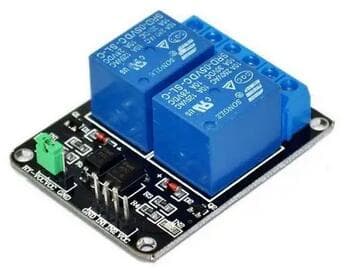
Marketing Development
Market Size
Global market: In 2022, the global optocoupler relay market sales reached a certain scale. According to relevant reports, it is expected to reach US$430 million in 2029, with a compound annual growth rate (CAGR) of 5.1% during 2023-2029.
Development
Technological Innovation:
Performance Enhancement: By developing new materials and improving manufacturing processes, the load capacity, response speed, isolation voltage, and other key performance indicators of optocoupler relays are continuously enhanced to meet the demands for high-performance relays in fields such as high-speed communication and industrial automation.
Integration and Multifunctionality: Optocoupler relays may integrate more functions in the future, such as built-in protection circuits and signal conditioning, consolidating more functional units into a single device to simplify circuit design and enhance system integration.
Adoption of New Semiconductor Materials: The application of new semiconductor materials such as silicon carbide and gallium nitride (GaN) is expected to further improve the performance and reliability of optocoupler relays, enabling them to adapt to more complex and harsh operating environments.
New Application Fields:
New Energy Sector: With the rapid development of renewable energy, optocoupler relays can be used in solar photovoltaic systems to achieve photoelectric conversion, solar panel temperature detection, and system safety control. In wind energy generation, they can also be used for circuit isolation and protection. Their application in the new energy sector will become a key point of development.
Automotive Electronics Sector: The widespread adoption of new energy vehicles has increased the requirements for relays in automotive electrical systems. Optocoupler relays can be used in battery management systems, motor control systems, and car light control to enhance the safety, reliability, and performance of vehicles.
Smart Home and Consumer Electronics Sector: With the increasing number of smart home devices, various household appliances such as air conditioners, refrigerators, and smart speakers need to interact and control each other. As an important component for connecting and isolating signals, optocoupler relays can achieve safe isolation between circuits, protecting user devices from electrical interference and providing users with a safer and more stable smart living experience.
Industrial Internet and Intelligent Manufacturing Sector: With the rise of the industrial internet, the demand for high-performance relays in intelligent control systems continues to grow. Optocoupler relays can be integrated with intelligent systems to achieve more flexible and intelligent electrical control. They play an important role in sensor signal isolation, PLC control, and instrumentation in industrial automation production lines, enhancing production efficiency and quality.
Medical Equipment Sector: Medical electronic devices have extremely high requirements for safety and reliability. Optocoupler relays can be used for electrical isolation and signal transmission to ensure the safety of patients and operators, while meeting stringent medical standards and certification requirements. They are applied in medical imaging equipment, patient monitoring devices, and more.
Communication Equipment Sector: Driven by new-generation communication technologies such as 5G and the Internet of Things (IoT), communication equipment increasingly demands high-speed, low-latency, and highly stable signal transmission and processing. Photocoupler relays can be used for signal isolation, amplification, and transmission, ensuring the stability and reliability of communication systems. They have wide applications in switches, routers, base stations, and other communication equipment.
Environmental Protection and Sustainable Development:
Increasingly stringent environmental regulations are prompting optocoupler relay manufacturers to adopt lead-free solder, eco-friendly packaging materials, and other measures to reduce the environmental impact throughout the product lifecycle. There is also a greater emphasis on energy efficiency and recyclability, leading to the production of more environmentally compliant products.

 English