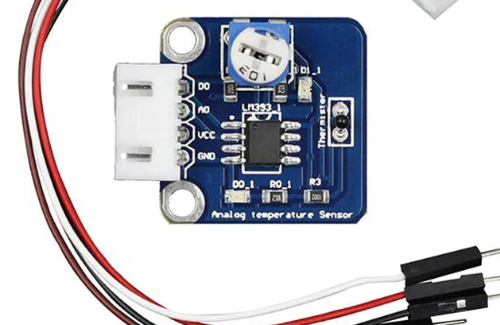
Industrial temperature sensors can be found in nearly every modern industrial process, regardless of complexity. Industrial sensors detect a physical quantity at their input and generate a corresponding electrical signal at their output. Operating as transducer devices, sensors facilitate the conversion of energy from one form to another. As implied by their name, sensors have the capability to perceive the surrounding environment and transform that input into a format comprehensible to a computer or process controller.
Introduction of Analog Temperature Sensor
Industrial temperature sensors, also known as temperature transmitters or temperature probes, operate based on various principles to measure and monitor temperatures in industrial settings.
Digital temperature sensors are devices designed to provide precise temperature measurements through an electrical signal. While the basic method of temperature measurement involves traditional thermometers that gauge how hot or cold something is, technological advancements have given rise to a variety of more accurate temperature sensors.
These analog temperature sensors serve as indispensable tools with widespread applications, many of which are integral to daily life. Common household appliances such as microwaves, refrigerators, and water heaters utilize temperature sensors to function optimally. Beyond domestic use, temperature sensors play a crucial role in diverse fields. In geotechnical monitoring, for instance, thermometers are essential instruments, and in the realm of renewable energy, temperature sensors contribute significantly to various processes and systems.
How Do Temperature Sensors Work?
Temperature sensors are instrumental in measuring temperature through electrical signals, typically employing two metals that generate electrical voltage or resistance in response to temperature changes.
These sensors play a crucial role across various industries, including medical applications, heating, ventilation, and air conditioning (HVAC) systems, and household electrical appliances. In these sectors, temperature sensors are indispensable for ensuring accuracy and precise temperature control.
The functioning of temperature sensors involves measuring the voltage across diode terminals. As the voltage rises, so does the temperature, leading to a subsequent voltage drop between the transistor terminals and the emitter (in a diode).
There are various types of temperature sensors, and they are categorized based on their connection. The distinction between these types is crucial, with two main categories depending on the application or industry requirements you are working in:
Contact Temperature Sensors
Non-contact Temperature Sensors
Contact Temperature Sensors
Contact temperature sensors measure the degree of hotness or coldness of an object or substance via direct contact. They are generally used to detect a wide range of temperatures in different solids, liquids, or gases.
Non-Contact Temperature Sensors
These temperature meters are never in direct contact with an object or substance, therefore, they are widely used in hazardous environments such as power plant industries. They measure how hot or cold something is via radiation emitted by a heat source.
Different Types of Temperature Sensors
To understand how temperature sensors work, contact and non-contact temperature sensors are further split up into the following types:
Thermometer
Thermostat
Thermistors
Thermocouples
Negative Temperature Coefficient (NTC) Thermistor
Semiconductor-based Temperature Sensor
Resistive Temperature Detectors (RTDs)
These sensors play a crucial role in industrial processes, allowing for precise temperature monitoring and control in various applications, such as manufacturing, chemical processing, and energy production. The choice of sensor depends on factors like the required accuracy, temperature range, and the specific conditions of the industrial environment.
What Applications Use Temperature Sensors?
Temperature sensors are indispensable tools across a spectrum of industries, addressing both commercial and consumer requirements. Here are the most prevalent applications where temperature sensors find widespread use:
Medical Applications
Temperature sensors play a crucial role in swiftly and precisely measuring patient temperatures. Additionally, they are employed in MRI imaging machines and portable ultrasound scanners for diagnostic purposes.
Electrical Appliances In Our Homes
Temperature sensors are integral components in a multitude of electrical appliances, serving purposes that may go unnoticed. They are commonly embedded in refrigerators to regulate and maintain the cold environment for preserving food and beverages. In ovens, temperature sensors ensure precise cooking by monitoring and controlling the temperature to specific levels. Likewise, they play a crucial role in air conditioners and wall heaters, contributing to maintaining optimal room temperatures.
Furthermore, temperature sensors are incorporated into battery chargers, where they serve the essential function of preventing both undercharging and overcharging of electrical appliances, thereby enhancing safety and extending the lifespan of batteries.
Oil Mining
Temperature sensors are essential for ensuring safety and efficiency in the oil mining industry. Oil drills are outfitted with built-in temperature sensors that alert workers when drilling operations need to be halted.
Vehicles
Temperature sensors are integrated into radiators within various vehicles. These sensors serve as a warning mechanism, alerting users if the engine temperature surpasses safe limits, preventing potential overheating issues. Additionally, they play a crucial role in climate control settings, enabling users to regulate and maintain the desired temperature inside the vehicle, whether for cooling or heating purposes.
HVAC Systems
Temperature sensors are indispensable components in HVAC (Heating, Ventilation, and Air Conditioning) systems, ensuring precise control of temperatures in specific rooms or buildings. Additionally, these sensors prove valuable for detecting leaks, particularly in air conditioning units.
Renewable Energy
Efficient energy production in renewable sources relies on temperature sensors to regulate and measure temperature. These sensors play a crucial role in various applications, including wind turbines, biomass combustion, solar heating pumps, and geothermal monitoring.
Chemical Industries
Chemical industries rely on high-quality and efficient temperature sensors to measure extremely elevated temperatures during chemical reactions.
Integrated Circuits
Integrated circuits are prevalent in desktop computers, laptops, mobile phones, and various daily-use electronic devices. These devices rely on integrated silicon temperature sensors to prevent overheating and ensure optimal performance.
Temperature sensors are found in our daily lives, whether it be in your home or the industry you work in. Temperature sensors are composed of two metals that generate an electrical voltage or resistance when a temperature change occurs by measuring the voltage across diode terminals.
Digital temperature sensors come in many types depending on the industry or application being used, however, resistive temperature detectors (RTDs) are the most popular because of their very precise measurements.
KUKE insists on supplying only original electronic components, such as high quality analog temperature sensor. If you have any question, please contact KUKE immediately.

 English