Nowadays, seemingly inconspicuous connecting components, such as solid state lighting connectors, often determine whether the entire lighting system can ultimately meet design requirements such as reliability, waterproof rating, and long lifespan. Connectors have become one of the key components in solid state lighting systems. Solid state lighting features energy efficiency, environmental friendliness, long lifespan, low maintenance, and ease of control.
Introduction
During the rapid development of solid state lighting, connecting components were often overlooked or not given much attention due to their relatively small cost contribution to the overall system. However, nowadays, seemingly inconspicuous connecting components often play a crucial role in determining whether the entire lighting system can ultimately meet design requirements such as reliability, waterproof rating, and long lifespan. Connectors have become one of the key components in solid-state lighting systems. Solid-state lighting is characterized by energy efficiency, environmental friendliness, long lifespan, low maintenance, and ease of control.
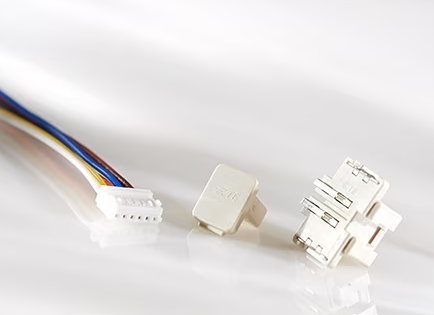
Solid state lighting connectors are small, sealed, single-row LED connectors designed to withstand various demanding lighting application environments. They include options for UV resistance in both wire-to-wire and wire-to-board configurations, SMT (Surface Mount Technology) and through-hole connectors, positive locking mechanisms, and pre-installed sealing rings. These connectors support standard 18-24 AWG cables.
Working principle
Solid state lighting (SSL) refers to lighting technology that uses semiconductor devices, typically light-emitting diodes (LEDs), to produce light.
Semiconductor Materials: Solid-state lighting relies on semiconductor materials, such as gallium nitride (GaN), which emit light when an electric current is applied to them. These materials are used to create LED chips.
LED Structure: An LED consists of several layers of semiconductor material sandwiched together. The two primary layers are the p-type and n-type layers, with a junction in between.
Electron-Hole Recombination: When a voltage is applied across the LED, electrons from the n-type layer move toward the p-type layer, while holes (positively charged vacancies) move in the opposite direction. When electrons and holes meet at the junction, they recombine, and this process releases energy in the form of photons, which are particles of light.
Light Emission: The energy level of the photons is determined by the bandgap of the semiconductor material. This energy level corresponds to the wavelength of light produced. Different materials and designs can produce different colors of light, from ultraviolet to visible to infrared.
Color Mixing: To produce white light, which is commonly used for general illumination, different-colored LEDs (typically red, green, and blue) can be combined. By controlling the intensity of each color, a wide range of colors and white light can be achieved.
Efficiency: Solid-state lighting is highly efficient because it directly converts electrical energy into light with minimal heat generation. Traditional incandescent bulbs, in contrast, produce a significant amount of heat.
Control: Solid-state lighting can be easily controlled and dimmed by adjusting the electrical current flowing through the LED. This allows for dynamic lighting effects and energy savings.
Longevity: LEDs have a long operational life, often exceeding 25,000 to 50,000 hours of continuous use, which reduces the need for frequent replacements.
Instant Lighting: LEDs provide instant illumination when powered on, with no warm-up time required.
Directional Lighting: LEDs emit light in a specific direction, making them well-suited for applications where focused or directional lighting is needed.
Overall, solid state lighting, especially LED technology, has revolutionized the lighting industry by offering energy-efficient, long-lasting, and versatile lighting solutions for a wide range of applications, from residential and commercial lighting to automotive and display lighting.
What are the benefits of solid state lighting?
Solid state lighting is used in a variety of lighting applications because it offers many benefits, including long life, energy savings, and better quality light output. They are also considered durable, intrinsically safe, and ideal for smaller, flexible light fixtures.
Why is solid state better?
SSDs are faster, more durable, more compact, quieter, and consume less energy. HDDs are more affordable and may offer easier data recovery if damaged. As long as price isn't the determining factor, SSDs come out on top — especially since modern SSDs are basically as reliable as HDDs.
Energy Efficiency: Solid-state lighting, especially LEDs, is highly energy-efficient. They convert a significant portion of electrical energy into visible light, minimizing energy waste as heat. This results in lower energy bills and reduced environmental impact.
Longevity: LEDs have a much longer operational life compared to traditional bulbs like incandescents or fluorescents. They can last tens of thousands of hours, reducing the frequency of replacements and maintenance costs.
Durability: Solid-state lighting is more durable and resistant to shock and vibration because it lacks fragile components like filaments or glass tubes. This durability makes it suitable for various applications, including outdoor and industrial environments.
Instant Lighting: LEDs provide instant illumination when powered on, with no warm-up time required. This is particularly beneficial for applications where immediate, reliable light is essential.
Directional Lighting: LEDs emit light in a specific direction, reducing the need for reflectors and diffusers. This directional nature makes them efficient for task and accent lighting.
Environmental Benefits: Solid-state lighting is more environmentally friendly. LEDs contain no hazardous materials like mercury (found in some fluorescent bulbs) and generate less light pollution. Their energy efficiency also reduces greenhouse gas emissions.
Reduced Heat Generation: Unlike incandescent bulbs, which produce a significant amount of heat, LEDs emit very little heat. This is especially important in enclosed spaces and reduces the risk of fire hazards.
Control and Automation: Solid state lighting systems can be easily integrated into smart lighting control systems, allowing for automation, remote control, and customization of lighting environments.
Overall, Due to these advantages, solid state lighting, particularly LED technology, is considered better than traditional lighting options due to its combination of energy efficiency, durability, longevity, and versatility. These benefits make it a preferred choice for various lighting applications in residential, commercial, industrial, and architectural settings.
KUKE insists on supplying only original electronic components, especially capacitors and connectors. Our quality management starts from the procurement process, strictly selecting our reliable supply partners. Only high-standard original factories or their authorized distributors can be the partner of our strict supply chain, to ensure that our components are 100% brand new, original and authentic.

 English