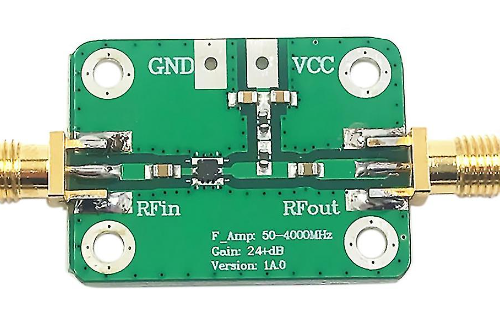
The high power RF amplifier module market experiences a surge due to its growing integration with Internet of Things (IoT) devices, fostering expanded connectivity and smart applications. Projections by Transparency Market Research indicate a robust CAGR of 6.8% for the global high power RF amplifier module market from 2023 to 2031. The market is anticipated to witness substantial growth, with overall sales revenue reaching an estimated US$ 14.7 billion by the conclusion of 2031.
Emerging Trends and Drivers:
An emerging driver in this market is the escalating demand for compact and lightweight modules, particularly in satellite communication and space exploration applications. The increasing frequency of space missions accentuates the necessity for high-power RF amplifiers in condensed form factors. As the space exploration domain evolves, there is a crucial need for compact yet potent RF amplifier modules, and this trend is anticipated to significantly influence market dynamics.
Market Expansion through Electrification Trend:
The ongoing trend of electrification in automotive systems is a key contributor to the market's expansion. With electric vehicles gaining mainstream acceptance, there is a growing demand for high-power RF amplifiers in electric propulsion and communication systems integrated into these vehicles. This presents a new avenue for market growth, driven by the increasing prevalence of electric mobility.
Diversification into Medical Applications:
The market is experiencing a notable uptick in demand for Power RF Amplifier Modules in medical applications, including magnetic resonance imaging (MRI) and RF ablation. The precision and robust power capabilities of these modules play a pivotal role in advancing medical diagnostics and therapies, expanding the market into critical healthcare sectors.
Competitive Landscape:
The high power RF amplifier module market features intense competition, with key players actively pursuing innovation and market dominance. Leaders in the industry prioritize research and development, consistently enhancing amplifier efficiency and performance. The heightened demand for reliable and high-power amplification in sectors like defense, telecommunications, and aerospace intensifies competition.
Strategies for Market Expansion:
Strategic collaborations and mergers remain prevalent strategies for expanding market presence. As technological advancements reshape the landscape, companies emphasizing product customization and adherence to stringent industry standards gain a competitive edge. The dynamic competitive environment in the high-power RF amplifier module market is characterized by a pursuit of cutting edge solutions and superior market positioning.
What Is An RF Amplifier?
An RF (Radio Frequency) amplifier is a device designed to increase the power of a weak radio frequency signal. RF stands for Radio Frequency, which represents the oscillation rate of electromagnetic waves. Frequency is measured in Hertz (Hz), which is equal to the number of oscillation cycles per second (1/s). It plays a crucial role in various communication and electronic systems where the amplification of radio frequency signals is necessary. RF amplifiers are employed in a wide range of applications, including wireless communication, radar systems, satellite communication, electronic warfare, avionics, and more.
The primary function of an RF power amplifier is to take a low-power RF signal and boost its power level while maintaining the integrity of the signal's characteristics. This amplified signal is then used to drive antennas, transmitters, or other components in the communication system.
Different types of RF amplifiers exist to fulfill specific requirements, such as Low-Noise Amplifiers (LNAs) for amplifying weak signals with minimal added noise, Broadband Amplifiers for flat response over a wide frequency range, RF Power Amplifiers for converting low-power signals to higher power, Solid-State Microwave Amplifiers for applications requiring extensive bandwidth, and RF & Microwave Amplifiers for high-power amplification at lower microwave frequencies.
Overall, RF amplifiers are crucial components in modern communication systems, contributing to the enhancement and reliability of radio frequency signals in various technological applications.
Applications and Use Cases
RF Amplifiers have a wide range of applications. Whenever people need to magnify a radio frequency signal into a higher power signal, the RF amplifier plays a pivotal role. They are used in commercial and defense avionics, space and deep space, electronic warfare, naval applications, mobile internet, satellite communication, and wireless communications. Low phase noise is a part of an amplifier design.
Commercial and Defense Avionics:
RF amplifiers are integral in avionics systems, both for commercial and defense purposes, ensuring enhanced signal strength and communication capabilities.
Space and Deep Space:
In space exploration and deep space missions, RF signal amplifier contributes to reliable signal amplification, aiding in effective communication and data transmission.
Electronic Warfare:
RF amplifiers play a vital role in electronic warfare systems, amplifying signals for improved detection, communication, and countermeasure capabilities.
Naval Applications:
Naval systems leverage RF amplifiers for robust communication, navigation, and radar applications, enhancing the overall performance of maritime technologies.
Mobile Internet:
RF amplifiers are instrumental in mobile internet technologies, ensuring efficient signal amplification for seamless connectivity and data transfer.
Satellite Communication:
Satellites rely on RF amplifiers for effective communication, ensuring strong and clear signals for various applications, including broadcasting and data transmission.
Wireless Communications:
RF amplifiers play a pivotal role in wireless communication networks, contributing to signal strength and coverage for reliable connectivity.
Low Phase Noise in Amplifier Design:
A crucial aspect of RF amplifier design is minimizing phase noise. This ensures that the amplified signals maintain low distortion and interference, contributing to the overall efficiency and quality of the amplification process.
Here are Several Categories of RF Amplifiers
Low-Noise Amplifiers (LNAs):
Purpose: Amplify weak signals captured by an antenna in communication systems.
Application: Commonly used in scenarios where signal sensitivity is crucial.
Broadband Amplifiers:
Purpose: Provide a flat response over a wide range of frequencies.
Application: Suitable for systems requiring consistent performance across diverse frequency bands.
RF Power Amplifiers:
Purpose: Convert low-power radio frequency signals into larger signals for transmitter antenna driving.
Applications: Used in wireless communication, TV transmissions, radar systems, and RF heating applications.
Solid State Microwave Amplifiers:
Purpose: Cater to applications demanding extensive bandwidth and high gain.
Applications: Commonly used in advanced communication systems and technologies.
RF & Microwave Amplifiers:
Purpose: Perform high-power amplification at lower microwave frequencies.
Applications: Widely employed in microwave communication and other systems requiring elevated power levels.
KUKE will continue to strive to meet customer needs as electronic components that can contribute to new generation power supplies, such as high quality rf amplifiers. If you have any question about low noise rf amplifier, please contact KUKE immediately.

 English