Capacitors are fundamental components in electronic circuits that store and release electrical energy. They are widely used in various applications, ranging from power supply filtering to timing circuits and signal coupling. To understand how electronic capacitors work, we need to delve into their construction, behavior, and applications in electronic circuits.
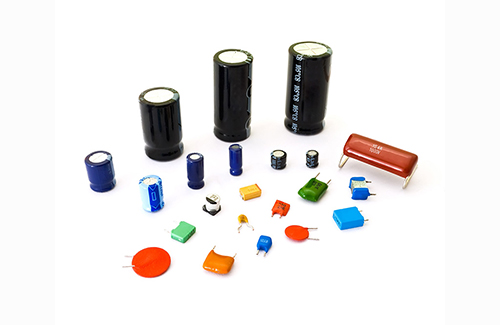
Construction of Capacitors:
A capacitor consists of two conductive plates separated by a dielectric material. The conductive plates are typically made of metal, such as aluminum or tantalum, and the dielectric can be various materials like ceramic, polyester, or electrolyte in electrolytic capacitors. The dielectric's properties determine the capacitor's characteristics, including capacitance value and voltage rating.
Capacitance of electronic Capacitors:
The capacitance of a capacitor determines its ability to store charge. It is defined as the ratio of the charge stored on one plate to the voltage across the capacitor. The capacitance (C) is measured in farads (F), with smaller units like microfarads (μF), nanofarads (nF), and picofarads (pF) commonly used in practical applications.
Charging and Discharging of Capacitors:
When a voltage is applied across the plates of a capacitor, the electric field is established in the dielectric, and charge accumulates on the plates. Initially, the capacitor is uncharged, and the voltage across it is zero. As the voltage is applied, the capacitor starts to charge, and the charge on the plates increases gradually. The relationship between voltage (V), capacitance (C), and charge (Q) can be expressed as Q = C × V.
When a charged capacitor is connected across a circuit, it can release the stored energy. The discharge process occurs as the charge on the plates moves from one plate to another through the circuit, resulting in a flow of current.
Capacitive Reactance of Capacitors:
Capacitors exhibit a property called capacitive reactance (Xc), which is a measure of the opposition offered by the capacitor to the flow of alternating current (AC). Capacitive reactance is inversely proportional to the frequency of the AC signal and the capacitance of the capacitor. The formula for capacitive reactance is Xc = 1 / (2πfC), where f is the frequency in hertz (Hz).
Applications of electronic Capacitors:
1. Energy Storage: Capacitors are used to store electrical energy temporarily. They can deliver high current bursts, making them suitable for applications such as camera flashes or power supply smoothing in electronic devices.
2. Filtering: Capacitors are commonly used in power supply circuits to smooth out voltage ripples caused by alternating current. They act as low-pass filters, allowing the direct current (DC) component to pass while attenuating the AC component.
3. Timing Circuits: Capacitors, in conjunction with resistors, can be used to create timing circuits. The time taken to charge or discharge a capacitor through a resistor determines the timing intervals in applications like oscillators or pulse generators.
4. Coupling and Decoupling: Capacitors are used for coupling signals from one circuit block to another while blocking direct current. In audio amplifiers, capacitors couple the AC audio signal while blocking any DC component.
5. Signal Filtering: Capacitors can be used to filter out specific frequencies or remove noise from signals. In electronic communication systems, capacitors are employed in filter circuits to remove unwanted high-frequency noise.
Types of Capacitors:
There are various types of capacitors available, each with its own characteristics suited to specific applications:
1. Ceramic Capacitors: These capacitors have a ceramic dielectric and are widely used due to their compact size, low cost, and availability in a wide range of capacitance values. However, they may exhibit nonlinear behavior and have lower capacitance tolerances.
2. Electrolytic Capacitors: Electrolytic capacitors have higher capacitance values and are commonly used for high capacitance applications, such as power supply filtering. They have polarities and should be connected with the correct polarity to avoid damage.
3. Film Capacitors: Film capacitors are made by depositing a metal film on a plastic or ceramic film. They exhibit good stability, low leakage current, and are suitable for applications requiring high precision.
4. Tantalum Capacitors: Tantalum capacitors offer high capacitance values in a small package. They have stable capacitance characteristics and are often used in portable electronics and telecommunications devices.
5. Aluminum Electrolytic Capacitors: These capacitors have high capacitance values and are commonly used in power supply circuits. They have relatively large physical sizes and are polarized.
6. Variable Capacitors: Variable capacitors have adjustable capacitance values, allowing for fine-tuning in applications like radio tuning circuits.
KUKE is a renowned distributor of capacitors, specializing in providing high-quality components to the electronic industry. With a strong reputation for reliability and customer satisfaction, KUKE has established itself as a trusted partner for sourcing capacitors for various applications.
1. Wide Range of Capacitors:
KUKE offers a diverse range of capacitors, catering to the needs of different industries and applications. Their product catalog includes ceramic capacitors, electrolytic capacitors, film capacitors, tantalum capacitors, and more. This extensive range allows customers to find the right capacitor for their specific requirements, ensuring optimal performance and reliability.
2. High-Quality Components:
Quality is a top priority for KUKE. They partner with reputable capacitor manufacturers known for their adherence to stringent quality standards. By sourcing capacitors from trusted suppliers, KUKE ensures that their customers receive components of exceptional quality, free from defects and capable of delivering reliable performance in demanding applications.
3. Expert Technical Support:
Understanding the importance of technical expertise in the electronic industry, KUKE provides expert technical support to its customers. Their knowledgeable team of engineers and professionals is well-versed in capacitor technology and can assist customers in selecting the most suitable capacitors for their specific applications. Whether it's determining the optimal capacitance value, voltage rating, or dielectric material, KUKE's technical support ensures that customers make informed decisions.
4. Customized Solutions:
KUKE recognizes that some applications may require specialized capacitor solutions. To address these unique needs, they offer customized solutions tailored to meet specific requirements. Whether it's modifying existing capacitor designs or developing entirely new components, KUKE's engineering team collaborates closely with customers to deliver personalized solutions that optimize performance and efficiency.
5. Competitive Pricing and Timely Delivery:
KUKE understands the importance of cost-effectiveness and timely delivery in the electronic industry. They strive to offer competitive pricing without compromising on quality. By maintaining strong relationships with manufacturers, KUKE can negotiate favorable pricing, ensuring that their customers receive value for their investment. Moreover, their efficient supply chain management and logistics capabilities enable them to deliver capacitors promptly, meeting project deadlines and minimizing downtime.
6. Commitment to Customer Satisfaction:
Customer satisfaction is at the core of KUKE's business philosophy. They are dedicated to building long-term relationships with their customers by delivering exceptional products and services. KUKE's customer-centric approach involves attentive communication, responsive support, and a commitment to resolving any issues promptly. By prioritizing customer satisfaction, they aim to exceed expectations and become a trusted partner in the electronic industry.
In conclusion, capacitors are essential components in electronic circuits that store and release electrical energy. Their ability to store charge, coupled with their reactance properties, makes them versatile in a wide range of applications. By understanding the construction, behavior, and different types of capacitors, engineers and designers can effectively utilize them in electronic systems to achieve desired performance characteristics.

 English