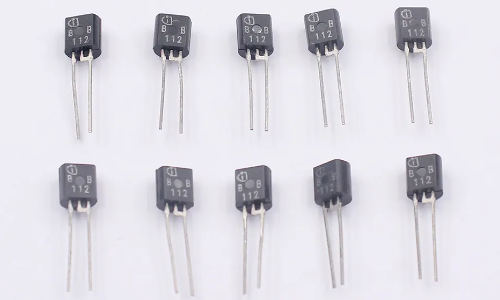
A Varicap diode operates as a voltage controllable capacitor, adjusting its capacitance depending on the reverse bias voltage applied within a circuit. The variable-capacitance diode is a product that makes use of the capacity characteristics of the depletion layer. The depletion layer occurs in the pn junction of the diode when the voltage is applied in the reverse direction, and the thickness varies in proportion to the reverse voltage.
What is a Variable Capacitance Diode?
Often referred to as a varactor diode or tuning diode, a varicap diode is a specialized semiconductor device that acts as a voltage controllable capacitor. Its primary role is in electronic circuits designed for frequency adjustment, notably in devices like radio and TV receivers. To grasp the concept of how a Varicap diode functions as a voltage controllable capacitor, one must explore its design and operational principles.
A varicap diode capitalizes on the capacitance characteristics of the depletion layer formed when a reverse voltage is applied to a PN junction. This depletion layer essentially acts as a spacer between electrodes, with its capacitance adjusting in response to the applied voltage.
Unlike conventional PN junction diodes, variable capacitance diodes operate specifically in regions where the PN junction remains reverse-biased without entering the breakdown state.
Construction and Working Principle
Within a PN junction diode, a depletion region emerges surrounding the PN junction. This region exhibits a high electrical resistance, resembling an insulator, owing to the absence of mobile carriers. Consequently, this depletion region functions akin to a capacitor, with its width expanding relative to the applied reverse voltage. Variable capacitance diodes capitalize on this voltage responsive capacitance of the depletion region for their operation.
The varicap diode operates on the principles of a PN junction diode but is specifically engineered to modify its capacitance based on variations in reverse bias voltage. Its capacitance is intricately linked to the width of the depletion region, which represents the insulating space between the P and N regions of the diode. With the application of a reverse bias voltage, this depletion region expands, leading to a reduction in capacitance.
Contrary to standard diodes that function primarily for rectification purposes, the variable capacitor diode is employed for its adjustable capacitance characteristics. In circuit applications, the diode operates in a reverse biased state, with the magnitude of the applied voltage dictating its capacitance level. As the reverse bias voltage intensifies, the capacitance diminishes, and conversely, it increases as the voltage decreases.
PN Junction Formation: A Varicap diode is essentially a PN junction diode where the P type and N type semiconductor materials come together to form a junction.
Depletion Region Creation: When a PN junction is formed, a depletion region is established around the junction. This region lacks mobile charge carriers (electrons and holes) due to the diffusion and recombination of these carriers.
Capacitance Variation: The width of this depletion region, which acts as an insulator, determines the diode's capacitance. As the reverse bias voltage increases across the diode, the width of the depletion region expands. Conversely, reducing the reverse bias voltage contracts the depletion region width.
Capacitance Mechanism: Capacitance is inversely related to the width of the depletion region. A wider depletion region results in decreased capacitance since the electric field across a wider gap can hold fewer charge carriers. Conversely, a narrower depletion region due to a reduced reverse bias voltage increases the capacitance as the electric field becomes more concentrated.
Voltage Control: In practical applications, the variable capacitor diode is used in a circuit with a specific reverse bias voltage applied. By altering this reverse bias voltage, the width of the depletion region, and thus the diode's capacitance, can be modulated. This voltage dependent capacitance property is leveraged in electronic circuits for frequency tuning, phase locked loops (PLLs), voltage controlled oscillators (VCOs), and other applications requiring variable capacitance.
Applications in Electronic Circuits
Variable capacitance diode finds extensive applications across various electronic circuits, primarily excelling in frequency adjustment tasks. Here are some prominent uses of Varicap diodes:
Voltage Controlled Oscillators (VCOs): Within VCOs, the oscillation frequency adjusts based on the voltage applied. Varicap diodes facilitate this frequency modulation by altering their capacitance according to the applied control voltage.
Phase Locked Loops (PLLs): PLLs play a pivotal role in communication systems, ensuring accurate frequency synthesis and synchronization. Varicap diodes regulate the VCO's operation within PLLs, ensuring meticulous frequency management.
Frequency Modulation (FM): Within FM setups, Varicap diodes come into play for frequency modulation of the carrier signal. This modulation mechanism enables the transmission of data via frequency alterations.
Tuning Circuits: Particularly in radio and television receivers, varicap diodes are instrumental. They facilitate tuning to distinct frequencies by modifying capacitance within the tuning mechanism.
To encapsulate, varicap diodes stand out as specialized semiconductor components functioning as voltage responsive capacitors. Their ability to adjust capacitance based on reverse bias voltage positions them as indispensable components in a plethora of electronic circuits, especially those emphasizing frequency tuning and modulation.
What Are the Key Characteristics of a Varicap Diode?
Voltage Dependent Capacitance: One of the primary features of a Varicap diode is its capacitance that varies in response to changes in the applied reverse bias voltage. As the reverse bias voltage alters, the width of the depletion region within the diode adjusts, consequently changing its capacitance.
High Quality Factor (Q): Varicap diodes typically exhibit a high Q-factor, which indicates their efficiency in resonant circuits. A higher Q-factor implies reduced energy losses, making them suitable for applications where efficiency is crucial.
Frequency Tunability: Due to their voltage-dependent capacitance, Varicap diodes are ideal for frequency tuning applications. By varying the reverse bias voltage, one can adjust the resonant frequency of circuits, such as oscillators or filters, where they are used.
Low Forward Bias Resistance: While Varicap diodes primarily operate in reverse bias mode for their variable capacitance characteristic, they typically have a low resistance when forward biased, ensuring minimal interference in circuits.
Temperature Stability: Modern Varicap diodes are designed to offer stable performance across varying temperature ranges, ensuring consistent operation in different environmental conditions.
Nonlinear Capacitance Voltage Relationship: Unlike regular capacitors, the capacitance of a Varicap diode does not exhibit a linear relationship with the applied voltage. Instead, it follows a nonlinear curve, which is essential for specific applications like frequency modulation.
KUKE insists on supplying only original electronic components, such as high quality voltage variable capacitor diode. If you have any question, please contact KUKE immediately.

 English