A starter solenoid in a car is an electromagnetic switch, which acts as a starter solenoid relay. Its primary function is to engage the starter motor when the ignition key is turned to the "start" position, allowing the engine to crank and begin running.it ensures that the high current needed to operate the starter motor is controlled safely and that the starter motor is engaged and disengaged cleanly, reducing wear and tear on the system. If a starter solenoid fails, the vehicle may exhibit symptoms such as clicking noises when trying to start, failure to crank, or difficulty starting the engine.
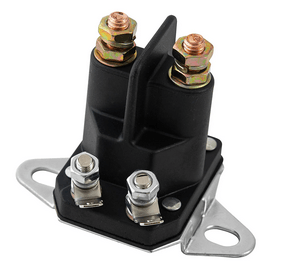
Starter Solenoid Structure and Working Principle
How does a starter solenoid look like?
1. Electromagnet: The electromagnetic valve of a car starter includes an electromagnet, which is the core of the entire system. The electromagnet has a winding, and the required electrical energy is supplied by the vehicle's battery. When the electromagnet is energized, it generates a magnetic field.
2. Cylinder: Inside the electromagnetic valve, there is a cylinder, and within the cylinder, there is a piston. When the electromagnet is energized, the magnetic field attracts the piston upward, causing it to rise.
3. Spring: Before the electromagnet is energized, the piston is compressed by a spring. When the electromagnet is de-energized, the spring's force pushes the piston back to its original position.
4. Needle Valve: There is a needle valve on the piston, which is connected to the flywheel gear of the car's engine. When the piston is attracted or pushed back, the needle valve opens or closes at a certain position on the flywheel gear.
5. Flywheel Gear: The flywheel gear, also known as the drive gear or starter gear, engages with the engine's flywheel through the opening and closing of the needle valve.
How does a starter solenoid work?
The working principle of starter solenoid can be summarized in the following steps:
1. Control Signal Input: When the driver turns the key or presses the start button, the electrical system's starting circuit sends a control signal to the car's starter solenoid.
2. Electromagnetic Force Action: Upon receiving the control signal, a strong magnetic field is generated within the electromagnetic coil of the car's starter solenoid, causing the small iron core inside the solenoid to be attracted, thereby changing the position of the valve.
3. Fuel Channel Opening: As the small iron core is attracted, the valve opens, connecting the fuel channel to the car engine's fuel system.
4. Fuel Injection and Engine Start: The fuel enters the engine's combustion chamber, mixes with air to form a combustible mixture. The car's starter valve supplies the right amount of fuel, which combines with the engine's rotating components and is ignited by the spark provided by the ignition system, causing the engine to start running.
This series of processes ensures that the car engine starts smoothly, providing the necessary power for the vehicle to drive.
Bad Starter Solenoid Symptoms
When the car starter solenoid has issues, the following situations may occur:
1. Difficulty in starting the engine or failure to start. When the solenoid malfunctions, it may cause the engine to fail to start or to start with difficulty, requiring multiple attempts to get it going. This is because it plays a crucial role in engine startup, and if it fails, it will affect the normal operation of the engine.
2. Decreased vehicle acceleration performance, especially at high speeds, where a lack of power may be felt. A malfunctioning solenoid can affect the engine's air intake, leading to reduced acceleration performance, and at high speeds, there may be a noticeable lack of power, requiring more throttle to maintain speed.
3. Automatic deceleration or engine stalling while driving. Solenoid failure can lead to abnormal phenomena such as automatic deceleration or engine stalling while driving, which can greatly inconvenience the driver and necessitate immediate repair.
4. Warning lights on the vehicle's dashboard may illuminate, such as the engine malfunction indicator light. A faulty solenoid can cause warning lights on the dashboard to come on, such as the engine malfunction indicator light, alerting the driver to the need for timely repair.
5. The vehicle's braking system may exhibit abnormalities, such as reduced braking force or an excessively long brake pedal travel. Solenoid failure may also lead to issues with the vehicle's braking system, such as reduced braking force or an excessively long brake pedal travel, posing a threat to driving safety and requiring immediate repair.
When encountering these situations, it is important to promptly check the working condition of the solenoid and, if necessary, perform repairs or replacement to ensure safe and comfortable driving.
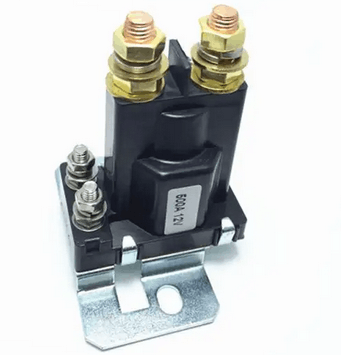
Starter Solenoid Test and Reset
How to Test A Starter Solenoid?
Testing a starter solenoid involves checking its electrical continuity and operation. The starter solenoid is an electromagnetic switch that engages the starter motor when you turn the ignition key to start the engine. Here's a step-by-step guide on how to test a starter solenoid:
Safety First
1. Ensure the vehicle is off and the keys are removed.
2. Disconnect the negative battery terminal to prevent any electrical shocks or short circuits.
3. Wait a few minutes for the electrical system to discharge.
Tools Preparation
1. Multimeter
2. Wire brush
3. Wrench set
4. Screwdriver (if needed to access the solenoid)
Steps to Test the Starter Solenoid
1. Locate the Starter Solenoid
The starter solenoid is usually mounted on the starter motor, which is located at the bottom of the engine, near the transmission.
2. Clean the Terminals
Use a wire brush to clean the battery terminals and the terminals on the solenoid to ensure good contact for testing.
3. Check the Solenoid's Power Supply
• Set your multimeter to measure DC voltage.
• Turn the ignition key to the "Start" position.
• Test for battery voltage at the small wire on the solenoid. You should read 12 volts or more.
• If there's no voltage, check the wiring, ignition switch, and neutral safety switch for issues.
4. Test the Solenoid's Operation
• Set the multimeter to measure resistance (ohms).
• Disconnect the small wire from the solenoid.
• Test the resistance across the two large terminals on the solenoid. You should see a low resistance reading, typically less than 1 ohm.
• If the resistance is infinite (open circuit), the solenoid may be faulty.
5. Check the Solenoid's Switching Function
• With the small wire still disconnected, connect one lead of the multimeter (set to measure continuity) to the small terminal and the other lead to the large terminal that the battery cable is connected to.
• Have an assistant briefly turn the ignition key to the "Start" position.
• You should hear a click and see a change in resistance on the multimeter, indicating the solenoid is switching.
• If there's no change, the solenoid may be faulty.
6. Test the Starter Motor
• If the solenoid tests good, you might want to test the starter motor itself.
• Connect your multimeter to the starter motor's terminals and check for continuity.
• A low resistance reading indicates the motor windings are good.
If the solenoid fails any of these tests, it may need to be replaced. However, before replacing it, ensure that the battery and all associated wiring are in good condition, as a problem in these areas can also cause the solenoid to fail. Always consult your vehicle's service manual for specific instructions related to your make and model.
How to Replace A Bad Starter Solenoid?
Replacing a bad starter solenoid is a task that can vary in complexity depending on the vehicle's make, model, and year. However, the general process involves the following steps:
Safety First
• Disconnect the Battery: Always disconnect the negative terminal of the battery to prevent any electrical shocks or short circuits.
• Use Proper Tools: Ensure you have the right tools for the job, which may include wrenches, sockets, screwdrivers, and possibly a solenoid puller if necessary.
Identify the Solenoid
• Locate the Solenoid: The starter solenoid is typically mounted on the starter motor itself or nearby on the vehicle's frame. It may be part of the starter assembly or a separate component.
Remove the Solenoid
• Unbolt the Solenoid: If the solenoid is a separate component, unbolt it from its mounting location. If it's integrated into the starter, you'll need to remove the entire starter assembly.
• Disconnect Electrical Connections: Carefully disconnect any wires or electrical connectors attached to the solenoid. Take note of where each wire goes for reassembly.
• Use a Solenoid Puller (if necessary): Some solenoids may require a special tool to remove them from the starter.
Installation of the New Solenoid
1. Prepare the New Solenoid:
• Check Compatibility: Ensure the new solenoid is the correct replacement for your vehicle.
• Clean the Mounting Area: Clean the area where the solenoid will be installed to ensure a good connection.
2. Install the New Solenoid:
• Attach Electrical Connections: Connect the wires and electrical connectors to the new solenoid, following the orientation and connections of the old one.
• Secure the Solenoid: Bolt the solenoid into place, ensuring it's securely fastened. If it's part of the starter, reinstall the starter assembly following the reverse order of removal.
Final Steps
• Reconnect the Battery: Once the solenoid is installed, reconnect the negative terminal of the battery.
• Test the Starter: Try starting the vehicle to ensure the new solenoid is working correctly. You should hear the starter engage when you turn the key.
Tips
• Take Photos: Taking photos of the wiring and connections before you start can be very helpful during reassembly.
• Check for Corrosion: Look for any signs of corrosion on the battery terminals, cables, and connectors. Clean them if necessary.
• Check Fuses and Relays: Sometimes, what seems like a bad solenoid might actually be a blown fuse or faulty relay. Check these components first.
If you're not comfortable performing this repair yourself, it's always a good idea to consult the vehicle's service manual or seek assistance from a professional mechanic if you are unsure about the installing process. Starter solenoid replacement can sometimes be more complex than described, especially on certain vehicle models.
Conclusion
Starter Solenoid plays an important role in car driving systems. This article focuses on its structure, bad starter solenoid symptoms, and starter solenoid replacement. If you have interest of it, just continue to follow us with more tech details about it.
You May Also Like

 English