Global adoption of fourth generation wireless (4G) long term evolution (LTE) smartphones and the ongoing transition to fifth generation wireless (5G) stand as the primary catalysts propelling the semiconductor industry forward. With 5G poised to achieve high data rate speeds (1 Gbps) and minimal latency (<1 ms), the demand for increased RF bandwidth is evident. This necessitates a rise in the integration of components such as RF switches, acoustic filters, and power amplifiers within a limited space in RF front end modules. Additionally, there is a surge in the number of RF radio transmitters and receivers concurrently in operation.
Novel architectural elements for 5G RF front end modules, providing circuit details and measurements aimed at reducing RF noise, enhancing efficiency, and facilitating the coexistence of multiple radio transmitters. The implementation of these circuits is anticipated to extend the applications of 5G, enabling functionalities such as radar like sensing, remote medicine, and advancements in autonomous driving.
Information of RF Front End Modules
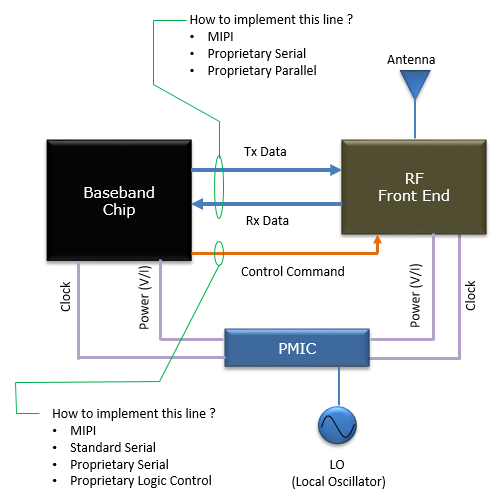
A Radio Frequency (RF) front end is a pivotal component found in electronic devices, especially in wireless communication systems and radio receivers. It acts as the critical interface connecting the antenna to the electronic circuitry responsible for processing and deciphering RF signals. The primary role of an radio frequency front end is to capture, filter, and condition incoming RF signals before they undergo processing in the subsequent stages of the device or system. In certain applications, there is a need to alter the frequency of the RF signal to a different range. This transformation is accomplished through the use of mixers and local oscillators integrated within the RF front end.
Market Analysis
The RF front end market is undergoing robust expansion, propelled by factors that are reshaping the telecommunications and electronics sectors. The global rollout of 5G networks stands out as a significant driver for this market. Given 5G's reliance on higher frequencies and advanced RF front end components, it facilitates faster data speeds and lower latency. With the continual expansion of 5G deployments worldwide, there is a sustained and growing demand for RF front end solutions, encompassing antennas, filters, and amplifiers.
The increasing prevalence of smartphones, tablets, and other Internet of Things (IoT) devices contributes to the escalating demand for wireless connectivity. In this context, RF front end components play a pivotal role in ensuring efficient wireless communication, becoming indispensable to support the expanding array of connected devices. The ongoing trend toward smaller and more integrated electronic devices, exemplified by wearables and IoT sensors, is fostering innovation in RF front end technology. Manufacturers are actively developing compact, multi functional RF front end modules to address the space and power constraints inherent in modern devices.
Key Takeaway from RF Front End Market Study
Within the market's diverse segments, the RF filters sector emerges as a prominent force, owing to various pivotal factors. The increasing demand for higher data rates and lower latency heightens the importance of RF filters in optimizing the performance of wireless networks.
Meanwhile, the consumer electronics segment stands as a powerhouse in the market, wielding substantial influence and revenue. Several key factors contribute to this dominance, underscoring the segment's significance and vitality. The escalating consumer expectations for faster and more reliable wireless connectivity have driven an unprecedented surge in demand for advanced RF front end solutions.
Market Dynamics Analysis
The RF front end market is undergoing dynamic transformations, influenced by a myriad of factors. A primary driver is the escalating demand for wireless communication technologies, notably 5G and IoT, propelling the market forward. These technologies necessitate advanced RF front end components to support faster data speeds, low latency, and heightened connectivity, creating a robust demand in the market. Furthermore, the widespread adoption of smartphones and smart devices contributes significantly to the market's growth.
However, amidst these opportunities, there are noteworthy restraints and challenges. The rising cost of RF front end components, driven by their increasing complexity and the scarcity of certain critical materials, poses a substantial constraint. Additionally, challenges such as regulatory compliance and spectrum allocation add complexity for manufacturers. As the market progresses, threats like intellectual property theft and competition from emerging technologies (e.g., beamforming and metamaterials) could disrupt the market's equilibrium. This dynamic landscape compels companies to engage in continuous innovation and protective measures for their technological advancements, ensuring they stay ahead in this highly competitive industry.
Key Regional Developments
Historically, North America has held a dominant position in the RF front end market and continues to be a pivotal player. The region is home to key market influencers such as Qualcomm, Skyworks Solutions, and Broadcom. North America's leadership in 5G deployment has been a catalyst for the heightened demand for advanced RF front end components.
The Asia Pacific region has emerged as a significant growth center in the RF front end market, largely propelled by the rapid expansion of 5G networks, particularly in countries like China and South Korea. With a vast population and increasing smartphone penetration, the Asia Pacific region is deemed crucial for the market's growth, establishing itself as a key market for RF front end components.
In Europe, there is a rising demand for RF front end components, driven notably by the widespread rollout of 5G networks across the continent. European companies are actively investing in research and development to stay competitive in the global market, reflecting the region's commitment to technological advancements and innovation in the RF front end sector.
How Does an RF Front End Work in a Conventional Radio Receiver?
The RF front end typically comprises the following components in most architectures:
RF Filter (Bandpass Filter):
This component receives the electromagnetic signal transmitted by the antenna. Its primary function is to serve as a bandpass filter, eliminating the image frequency and preventing the saturation of input stages caused by strong out of band signals.
RF Amplifier:
Employed to amplify weak signals while minimizing the introduction of noise, the RF amplifier plays a crucial role in enhancing the strength of incoming signals.
Local Oscillator:
The local oscillator generates a stable high frequency signal in close proximity to the input signal. This ensures a reliable reference for subsequent processing stages.
Mixer:
Tasked with creating a signal at a specific desired frequency, the mixer achieves this by "mixing" the electromagnetic wave signal received from the antenna with the signal generated by the local oscillator. This process is pivotal in generating a frequency converted output for further stages of signal processing.
KUKE insists on supplying only original electronic components, such as high quality rf front end module. If you have any question, please contact KUKE immediately.

 English