In electronics, variable capacitance diodes, is also called Varicaps, Varactor diodes, Reactance diode, Tuning diode, so many names for a single thing. What is a variable capacitance diode? What is the use of it? How does it work? Look at the following content.
Variable Capacitance Diode Basic
What is a Variable Capacitance Diode?
A variable capacitance diode, also known as a varicap diode, voltage-variable capacitor, or tuning diode, is a type of diode that is designed to exploit the voltage-dependent capacitance of a reverse-biased p-n junction. In other words, it changes its reverse bias on the PN junction to alter the capacitance of the junction. The relationship between reverse bias and junction capacitance is nonlinear. When the reverse bias voltage increases, the junction capacitance decreases; conversely, when the junction capacitance increases. The capacitance of the varactor diode is generally small, with a maximum ranging from tens of pF to several hundred pF, and the ratio between maximum and minimum capacitance is approximately 5:1. It is mainly used in high-frequency circuits for automatic tuning, frequency modulation, phase modulation, and similar applications.
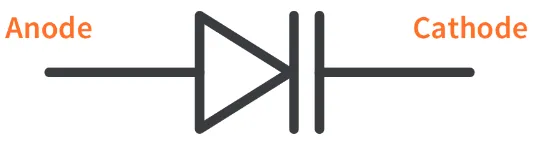
Figure 1: Variable Capacitance Diode Symbol
Variable capacitance diodes are available in various packages such as glass, plastic, metal, and leadless surface mount. Typically, small to medium power variable capacitance diodes are packaged in glass, plastic, or surface mount forms, while high power varicap diodes often use metal packaging.
Variable Capacitance Diode Features
Variable capacitance diodes have the following characteristics and advantages:
1) Accurate control: Their capacitance can be precisely adjusted by applying an external voltage.
2) Small size: Their compact dimensions suitable for integration into integrated circuits.
3) Fast response speed: Have high response speed, quickly reacting to changes in signals.
4) Wide operating frequency range: Have good linearity and tuning characteristics across different frequency ranges.
How Does a Variable Capacitance Diode Work?
Working Principle
Variable capacitance diodes are a special type of diode designed based on the principle that the junction capacitance of a typical diode can vary with changes in applied reverse voltage. The important thing to note here that the PN junction of a diode has a junction capacitance. When a reverse voltage is applied across the PN junction, electrons in the N-type semiconductor are attracted towards the positive terminal, and holes in the P-type semiconductor are attracted towards the negative terminal. This creates a depletion region where there are neither electrons nor holes. Name the width of this depletion region as d, which varies with the reverse voltage. As the reverse voltage increases, the depletion region widens, reducing the diode's capacitance C. Conversely, decreasing the reverse voltage narrows the depletion region, increasing the diode's capacitance. Changes in the reverse voltage alter the depletion region, thereby varying the junction capacitance of the varactor diode. Thus, its operating principle involves varying the PN junction's capacitance by applying a reverse voltage.
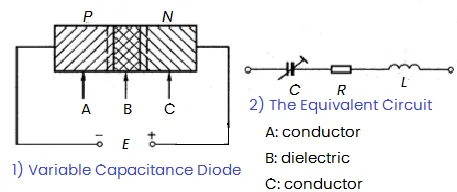
Figure 2: Variable Capacitance Diode Structure and Its Equivalent Circuit
Based on this principle, variable capacitance diodes are commonly used in circuits such as automatic frequency control, scanning oscillators, frequency modulation, and tuning circuits. Typically, they are diffusion type diodes made of silicon, but special types like alloy diffusion, epitaxial junction, and double diffusion diodes can also be used. These diodes exhibit a significant change in junction capacitance with voltage. The variation of junction capacitance with reverse voltage replaces variable capacitors and is used in tuning circuits, oscillators, phase-locked loops, and frequently in channel switching and tuning circuits for high-frequency televisions.
Working States
A variable capacitance diodes is a special type of diode that can change its capacitance by varying the applied voltage. Its operating states can be divided into two:
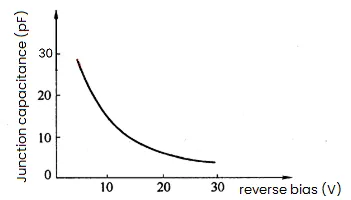
Figure 3: Variable Capacitance Diode Characteristic Curve
1. Forward bias state: When the positive terminal of the varactor diode is connected to the positive terminal of the power supply and the negative terminal to the negative terminal of the power supply, it is in a forward bias state. In this state, the capacitance of the varactor diode is small, allowing a relatively large current to pass through.
2. Reverse bias state: When the positive terminal of the varactor diode is connected to the negative terminal of the power supply and the negative terminal to the positive terminal of the power supply, it is in a reverse bias state. In this state, the capacitance of the varactor diode is large, allowing only a small current to pass through.
It's important to note that varactor diodes should operate within their rated voltage range to avoid damaging equipment. Additionally, their capacitance varies with temperature, necessitating appropriate compensation measures in practical applications.
How to Calculate the Value of a Variable Capacitance Diode?
Main Parameters
The calculation of variable capacitance diodes primarily involves several important parameters:
1) Reverse voltage: This is the maximum reverse voltage that a variable capacitance diode can tolerate. Exceeding this voltage will cause the diode to break down and lose normal operation.
2) Junction capacitance: This refers to the size of the junction capacitance of the variable capacitance diode, which determines its capacitance in the forward bias state.
3) Reverse recovery gain: This indicates the amount of charge required when the variable capacitance diode switches from the forward bias state to the reverse bias state, where the current rapidly decreases or stops. A smaller reverse recovery gain results in faster reverse switching of the diode.
4) Reverse recovery time: This refers to the time required for the variable capacitance diode to switch from the forward bias state to the reverse bias state. A shorter reverse recovery time indicates stronger reverse recovery capability of the diode in fast switching scenarios.
Variable Capacitance Diode Formula
When calculating the series resistance of a variable capacitance diode, the following formula can be used:
R(tall)=(Vf/If)+Rs
Where,
Vf is the forward voltage.
If is the forward current.
Rs is the series resistance.
Please note that this formula is a simplified model and is only suitable for approximate calculations. In reality, the characteristics of variable capacitance diodes may be influenced by factors such as temperature, frequency, and bias voltage. Therefore, more detailed circuit analysis and measurements are required for specific applications. Additionally, variable capacitance diodes are commonly used as substitutes for capacitors, especially in RF circuits, where resistance is typically not the primary consideration. For more detailed circuit design or calculations, please refer to relevant datasheets.
Variable Capacitance Diode Applications Explained
In electronics, a variable capacitance diode usually has a variable capacitance with a change in the applied reverse bias voltage. They are widely used in electronic circuits for their voltage-controlled capacitance property. Here are some common applications of variable capacitance diodes:
1. Voltage-Controlled Oscillators (VCOs)
Variable capacitance diodes are used in VCOs to generate an oscillating signal with a frequency that can be adjusted by changing the voltage across the diode. This is useful in communication systems for frequency modulation (FM) and phase-locked loops (PLLs).
2. Frequency Tuning in Radios
In radio receivers and television sets, Variable capacitance diodes are used for tuning the circuit to the desired frequency. By varying the voltage across the diode, the resonant frequency of the tuned circuit can be adjusted to select different stations.
3. Phase Modulators
Variable capacitance diodes can be used to modulate the phase of an RF signal. This is useful in phase modulation schemes and in some types of frequency synthesizers.
4. Automatic Frequency Control (AFC) Circuits
In AFC circuits, varicap diodes help to maintain the frequency stability of an oscillator by automatically adjusting the capacitance in response to changes in the oscillator's frequency.
5. Electronic Tuning
Variable capacitance diodes are used in various electronic tuning applications where manual tuning would be impractical or inconvenient, such as in cellular phones, satellite receivers, and other wireless communication devices.
6. Parametric Amplifiers
At microwave frequencies, Variable capacitance diodes can be used in parametric amplifiers, which provide low-noise amplification by using the varactor's non-linear capacitance.
7. Filters
Variable capacitance diodes can be used in voltage-controlled filters to adjust the frequency characteristics of the filter dynamically.
8. Adjustable Capacitance
In any application where a variable capacitance is needed and can be controlled electronically, variable capacitance diodes can be used as a solid-state alternative to mechanical variable capacitors.
Variable capacitance diodes are valued for their small size, reliability, and the ease with which their capacitance can be adjusted electronically. They are an essential component in modern wireless communication and broadcast systems.
The Other
Faults of Variable Capacitance Diodes
When a variable capacitance diode malfunctions, it typically manifests in the following two scenarios:
(1) Leakage current occurs, causing the high-frequency modulation circuit to either malfunction or exhibit degraded modulation performance.
(2) Deterioration in varactor performance results in unstable operation of the high-frequency modulation circuit, leading to distortion of the modulated high-frequency signal transmitted and received by the counterpart.
Replacement of Variable Capacitance Diodes
After a varactor diode is damaged, it should be replaced with either the same model or another model with similar primary parameters (especially ensuring the capacitance range matches or is close to the original).
Variable capacitance diodes are widely used in fields such as radio, communication, and control systems. It has the advantages of high operating frequency, low loss, and simple circuit, and can achieve significant frequency deviation. If you want to learn more about it, please continue to follow us.

 English