LM324 vs. LM358DR: Basic Introduction
LM324: Quad 30-V 1.2-MHz Operational Amplifier
LM324 is the industry-standard operational amplifier (op amp), which includes 4 high-voltage (36V) op amps. And it provides wide-range values for cost-sensitive applications, with features including low offset (600µV, typical), common-mode input range to ground, and high differential input voltage capability. In addition, high ESD (2kV HBM and 1.5kV CDM) and integrated EMI and RF filters enable the LM324 devices to be used in the most rugged, environmentally challenging applications.
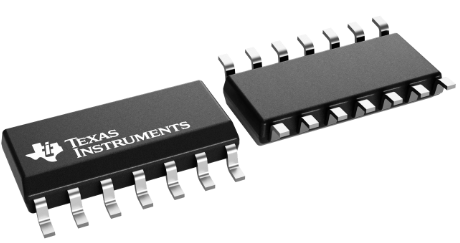
Figure 1: LM324 Quad Op Amp
LM324 Features
• Next-generation LM324B and LM2902B
• B versions are drop-in replacements for all versions of LM224, LM324, and LM2902
• Improved specifications of B version
– Supply range: 3V to 36V (B, BA versions)
– Low input offset voltage: ±2mV (BA version) / 3mV (B version)
– ESD rating: 2kV (HBM), 1.5kV (CDM)
– EMI rejection: integrated RF and EMI filter
– Low input bias current: 50nA (max)
– 40°C to 125°C)
• Input voltage differential can be driven up to supply voltage
LM358: Dual, 30-V, 700-kHz Operational Amplifier
The LM358DR is also the next-generation versions of the industry-standard operational amplifier (op amp) from Texas Instruments (TI), which includes two high-voltage (36V) op amps. It provides optional values for cost-sensitive applications, with features including low offset (300µV, typical), common-mode input range to ground, and high differential input voltage capability.
It is designed with enhanced features such as unity-gain stability, lower offset voltage maximum of 3mV, and lower quiescent current of 300µA per amplifier (typical). Further more, high ESD (2kV, HBM) and integrated EMI and RF filters enable the LM358 devices to be used in a wide range of analog applications such as signal conditioning, filtering, and amplification.
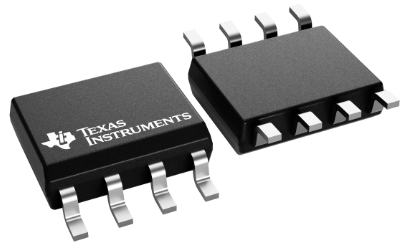
Figure 2: LM358DR Dual Op Amp
LM358DR Features
• Wide supply range of 3V to 36V
• Quiescent current: 300µA/ch
• Unity-gain bandwidth of 1.2MHz
• Common-mode input voltage range includes ground, enabling direct sensing near ground
• 2mV input offset voltage maximum at 25°C
• 3mV input offset voltage maximum at 25°C
• Internal RF and EMI filter
• On products compliant to MIL-PRF-38535, all parameters are tested unless otherwise noted. On all other products, production processing does not necessarily include testing of all parameters.
LM324 vs. LM358DR: Specific Comparisons
LM324 vs. LM358DR Pinout
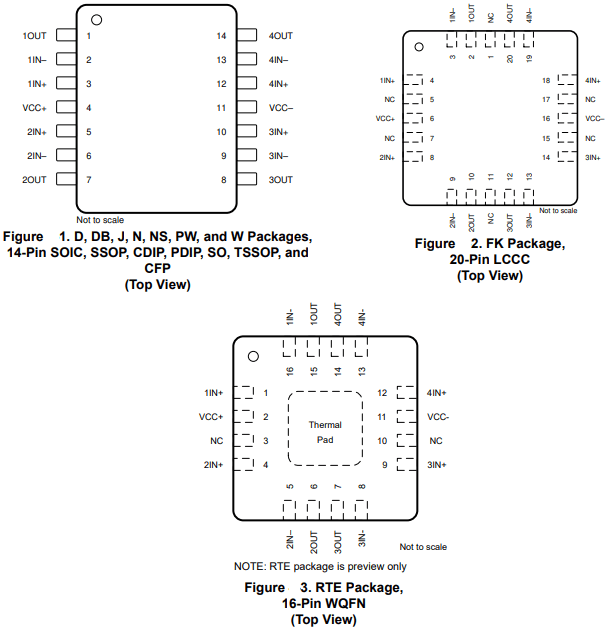
Figure 3: LM324 Pinout
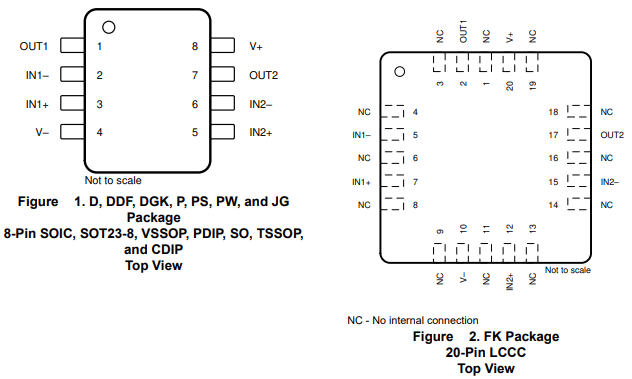
Figure 4: LM358DR Pinout
LM324 vs. LM358DR Functional Block
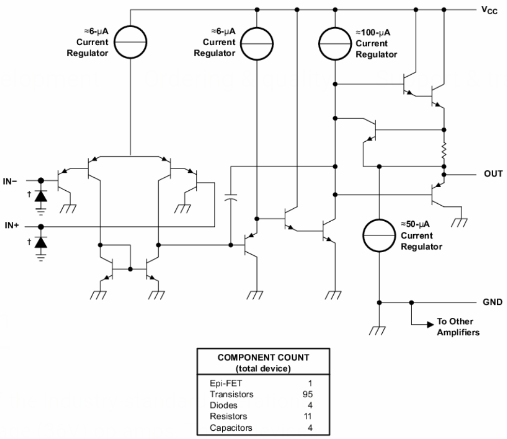
Figure 5: LM324 Functional Block Diagram
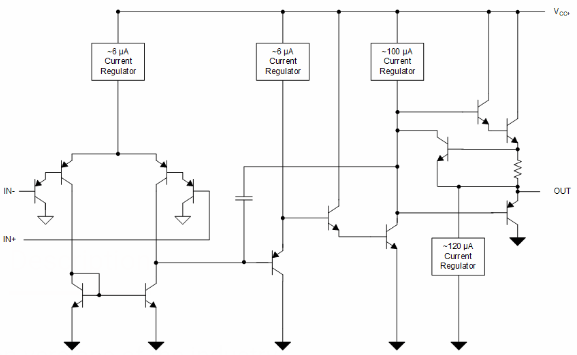
Figure 6: LM358DR Functional Block Diagram
LM324 vs. LM358DR Specifications
LM324 is similar to LM358 but with 4 op-amps in one package, often used when multiple op-amps are needed. Here is a comparison of their main parameters.
|
Parameters
|
LM324
|
LM358DR
|
|
Type
|
Quad op-amp
|
Quad op-amp
|
|
Op-Amps per Package
|
4
|
2
|
|
Total supply voltage (max) (V)
|
30
|
30
|
|
Total supply voltage (min) (V)
|
3
|
3
|
|
Rail-to-rail
|
In to V-
|
In to V-
|
|
GBW (typ) (MHz)
|
1.2
|
0.7
|
|
Slew rate (typ) (V/µs)
|
0.5
|
0.3
|
|
Vos (offset voltage at 25°C) (max) (mV)
|
7
|
7
|
|
Iq per channel (typ) (mA)
|
0.175
|
0.35
|
|
Vn at 1 kHz (typ) (nV√Hz)
|
35
|
40
|
|
Rating
|
Catalog
|
Catalog
|
|
Operating temperature range (°C)
|
0 to 70
|
0 to 70
|
|
Input bias current (max) (pA)
|
250000
|
150000
|
|
CMRR (typ) (dB)
|
80
|
80
|
|
Iout (typ) (A)
|
0.04
|
0.03
|
|
Architecture
|
Bipolar
|
Bipolar
|
|
Input common mode headroom (to negative supply) (typ) (V)
|
0
|
0
|
|
Input common mode headroom (to positive supply) (typ) (V)
|
-1.5
|
-1.5
|
|
Output swing headroom (to negative supply) (typ) (V)
|
0.005
|
0.005
|
|
Output swing headroom (to positive supply) (typ) (V)
|
-2
|
-2
|
Differences between the LM324 and LM358DR’s Features
• The LM324 and LM358 are both dual operational amplifiers (op-amps) made by manufacturers like Texas Instruments and other semiconductor companies. They have many similarities and differences.
• Both ICs have very similar voltage ranges, so there's no significant difference in terms of the supply voltage capability. They are designed for single-supply operation and have similar output swing characteristics, but the LM358 may have a slight edge in terms of low output voltage precision in certain applications.
• If low power consumption is critical, the LM358 may be a better choice. However, LM324 is a better choice for circuits that need more op-amps, while LM358 is ideal for simpler or more compact designs requiring only two op-amps.
• In terms of general performance characteristics like bandwidth, slew rate, and offset voltage, both the LM324 and LM358 are very similar, though specific parameters can vary slightly between different manufacturers and exact versions.
LM324 vs. LM358 Applications
|
LM324
|
LM358DR
|
|
• Merchant network and server power supply units
• Multi-function printers
• Power supplies and mobile chargers
• Desktop PC and motherboard
• Indoor and outdoor air conditioners
• Washers, dryers, and refrigerators
• AC inverters, string inverters, central inverters, and voltage frequency drives
• Uninterruptible power supplies
|
• Merchant network and server power supply units
• Multi-function printers
• Power supplies and mobile chargers
• Motor control: AC induction, brushed DC, brushless DC, high-voltage, low-voltage, permanent magnet, and stepper motor
• Desktop PC and motherboard
• Indoor and outdoor air conditioners
• Washers, dryers, and refrigerators
• AC inverters, string inverters, central inverters, and voltage frequency drives
• Uninterruptible power supplies
• Electronic point-of-sale systems
|
Conclusion
• If you need four op-amps in one package, go for the LM324.
• If you only need two op-amps and want slightly lower power consumption, the LM358DR may be the better choice.
• In most standard applications, either of these two op-amps will work similarly, but the LM358DR is often preferred in power-sensitive circuits.
Note: What Is Dual Operational Amplifier?
A dual operational amplifier (dual op-amp) is an integrated circuit (IC) that contains two independent operational amplifiers in a single package. Each of these op-amps can be used separately to amplify signals in different parts of a circuit.
1. Key Features of a Dual Operational Amplifiers
• Two Op-Amps in One Package: As the name suggests, a dual op-amp provides two separate operational amplifiers, sharing a common power supply, but each amplifier can be used independently for different tasks.
• Shared Power Supply: The two op-amps in a dual op-amp IC share the same power supply and ground pins. However, the input and output pins for each op-amp are separate, so they can function independently within the same circuit.
• Common Package Types: Dual op-amps are often available in packages like DIP-8 (dual in-line package) or SOIC-8 (small outline IC), making them easy to use and fit into various electronic designs.
• Cost and Space Savings: Instead of using two separate op-amp ICs, a dual op-amp allows you to save space and reduce the number of components on a circuit board, making it a cost-effective solution when multiple op-amps are needed.
2. Typical Uses of Dual Operational Amplifiers
• Signal Conditioning: Dual op-amps are used in circuits where you need to process or filter multiple signals, such as in audio processing, sensor conditioning, or analog filtering.
• Differential Amplifiers: They can be used to build differential amplifiers, which measure the difference between two input signals.
• Comparator Circuits: Dual op-amps can be configured as comparators for use in circuits that need to compare two voltages.
• Voltage Follower (Buffer) Circuits: One of the op-amps in a dual IC can be used as a buffer (a voltage follower) to isolate different parts of a circuit.
• Integrator and Differentiator Circuits: Op-amps are commonly used to integrate or differentiate signals in analog computing or control systems.
You May Also Like

 English