Resistors are very common in electronic circuits, here we will talk about resistor for led lights. As a type of diode, LEDs have conduction characteristics that can lead to excessive current if not properly limited, causing damage to the LED circuits. By appropriately adding resistors in the circuit, we can effectively limit the current flowing through, preventing overload and extending its lifespan. Additionally, resistors help stabilize the operating conditions of the LED. The operating voltage of an LED is constant, and different models of LEDs have varying voltage ranges. By adding a resistor, we can accurately calculate the required resistance value based on the LED's operating voltage and the supply voltage, ensuring that the LED receives a stable operating voltage for proper work.
Resistor in LEDs
LED is a semiconductor device that converts electrical energy into light energy. In LED circuits, resistors play a very important role. This article will discuss the role of resistors in LED circuits, including their functions, calculation methods, common connection methods, etc. Here resistors are commonly used to limit the current flowing through the LED. LEDs are current-driven devices, meaning that they require a specific amount of current to operate safely. If too much current flows through an LED, it can overheat and become damaged or burn out.
Why Use a Resistor?
1. Current Limiting: Resistors prevent excessive current from flowing through the LED.
2. Voltage Drop: They help to drop the voltage to a safe level for the LED, especially when the supply voltage is higher than the LED's forward voltage.
How to Calculate the Resistor Value?
To calculate the appropriate resistor value, you can use Ohm's Law. The formula is:
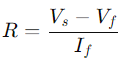
Where:
• R is the resistance in ohms (Ω).
• Vs is the supply voltage (volts).
• Vf is the forward voltage of the LED (typically around 2V for red LEDs and up to 3.5V for blue or white LEDs).
• If is the forward current of the LED (in amperes; commonly around 20mA for standard LEDs).
Example Calculation
If you have a 9V supply and a red LED with a forward voltage of 2V and a forward current of 20mA (0.02A):
1) Calculate the voltage drop across the resistor:

2) Calculate the resistor value:
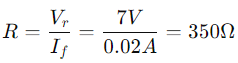
In this case, you would use a resistor with a value of approximately 350Ω. You can use the nearest standard resistor value, which would be 360Ω.
Power Rating of Resistor
Additionally, it's important to ensure the resistor can handle the power it will dissipate. Use the formula:
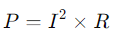 Or
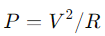
In our example:

So, a resistor rated for at least 1/4W (0.25W) would be suitable.
Using the correct resistor in an LED circuit is necessary to ensure safe and reliable operation. Always double-check your calculations to select the right resistor value and rating.
Resistor Applications
Different Types of Resistors Used in LED Circuits
In LED circuits, various types of resistors are used to control the current flowing through the LEDs, ensuring they operate safely and efficiently. Also more factors should be considered, such as power handling, precision, and physical space constraints. Here are the different types of resistors commonly used in LED circuits:
1. Axial-leaded Wirewound Resistors
These resistors are suitable for LED lighting applications and are known for their durability and stability under varying current conditions.
2. Aluminum-housed Wirewound Resistors
These resistors are also used in LED lighting and offer good heat dissipation properties.
3. Thin-film Resistors
Known for their precision and low temperature coefficient, these resistors are used in applications requiring high accuracy.
4. Alloy Resistors
These resistors are used in LED circuits and are known for their good stability and low temperature coefficient.
5. Long Electrode Resistors
These resistors are used in LED circuits and are designed to handle higher power applications.
6. Four-foot Resistors
These resistors are used in LED circuits and are designed for specific configurations where four-foot connections are necessary.
7. Metal Film Resistors
These resistors are used in LED circuits and are known for their good stability and low temperature coefficient.
8. Ballast Resistors
These resistors are used to limit the current flowing through the LED, preventing it from burning out. They are commonly used in series with a voltage source and an LED to power the LED safely.
9. SMD (Surface Mount Device) Resistors
These resistors are used in LED circuits and are integrated into the circuit board, making them suitable for compact and space-efficient designs.
Resistor Connections in LED Circuits
Resistor in Series LED Circuit
When connecting multiple LEDs in series, the total voltage drop across all the LEDs must be less than the supply voltage. The current through each LED in series is the same, and the resistor is used to limit this current to a safe level for the LEDs.
Resistor in Series Formula
Here’s how to calculate the resistor value for multiple LEDs in series:
1. Determine the Total Forward Voltage Drop: Add the forward voltage (Vf) of each LED in the series. For example, if you have 3 LEDs with a Vf of 2.2V each, the total Vf is 6.6V.
2. Subtract the Total Vf from the Supply Voltage: Subtract the total Vf from the supply voltage to find the voltage drop across the resistor. For instance, if the supply voltage is 12V and the total Vf is 6.6V, the voltage drop across the resistor is 5.4V.
3. Calculate the Current: Decide on the desired current through the LEDs. For example, if you want 20mA (0.02A), this will be the current through the resistor.
4. Calculate the Resistor Value: Use Ohm’s Law (V = IR) to find the resistor value. In the example, 5.4V / 0.02A = 270 ohms.
5. Check the Power Dissipation: Calculate the power dissipated by the resistor (P = I^2 * R). In the example, (0.02A)^2 * 270 ohms = 0.108W. Ensure the resistor is rated for at least this power to avoid overheating.
Example Calculation
Assuming you have three red LEDs (2V each) connected in series and a power supply of 9V, and the forward current is 20 mA (0.02 A):
1. Total Forward Voltage:

2. Calculate the Resistor:

You would use a resistor of approximately 150Ω.
3. Power Rating Calculation:

A 1/4W (0.25W) resistor would be suitable.
Pros and Cons
1. Advantages of Series Connection
• Simpler Wiring: Fewer connections and potentially less complexity in circuit layout.
• Uniform Current: Ensures that all LEDs receive the same current.
2. Disadvantages
• Voltage Dependency: If one LED fails open, the entire string will go dark.
• Limited by Voltage: The total forward voltage must not exceed the supply voltage.
Connecting multiple LEDs in series can be efficient if you calculate the total forward voltage and current correctly. Always include a resistor to limit the current and protect the LEDs. Ensure your power supply can provide sufficient voltage for the series configuration.
Resistor in Parallel LED Circuit
When connecting multiple LEDs in parallel, each LED should have its own current-limiting resistor to ensure that each LED receives the same current and operates at the same brightness. This configuration helps to prevent uneven brightness and potential damage to the LEDs due to differences in their forward voltage drops.
Resistor in Parallel Formula
Here’s how to calculate the resistor value for each LED in a parallel circuit:
1. Determine the Forward Voltage (Vf) and Desired Current (If) for Each LED: This information is typically provided in the LED datasheet.
2. Calculate the Resistor Value for Each LED: Use Ohm’s Law (R = (Vsupply - Vf) / If), where Vsupply is the supply voltage, Vf is the forward voltage of the LED, and If is the desired current through the LED.
3. Calculate the Power Dissipation for Each Resistor: Use the formula P = If^2 * R, where P is the power, If is the current, and R is the resistance. Ensure that the resistor’s power rating is higher than the calculated power to prevent overheating.
4. Consider the Total Current Draw: The total current drawn by the circuit will be the sum of the currents through each LED. Ensure that the power supply can handle this total current.
5. Use a Single Resistor for Multiple LEDs in Parallel: While it is possible to connect multiple LEDs in parallel with a single resistor, this method is generally not recommended as it can lead to uneven brightness and potential damage due to differences in the forward voltage drops of the LEDs.
Example Calculation
Assuming you have three blue LEDs (forward voltage of 3V) connected in parallel with a 9V power supply, and you want each LED to run at 20 mA (0.02 A):
1. Calculate the Resistor for Each LED:

Each LED would require a 300Ω resistor.
2. Power Rating of the Resistors
Calculate the power rating for each resistor to ensure it can handle the power dissipation:

A 1/4W (0.25W) resistor would be suitable.
Pros and Cons
1. Advantages of Parallel Connection
• Independent Operation: If one LED fails, the others remain lit.
• Uniform Brightness: Each LED can be controlled individually, maintaining consistent brightness across the circuit.
2. Disadvantages
• Current Distribution: Variations in LED forward voltages can lead to unequal current distribution, which may require individual resistors.
• Higher Current Demand: The total current requirement may exceed the power supply's capacity, so ensure the power supply can handle the total current.
Using multiple LEDs in parallel allows for independent operation and flexibility, but it’s crucial to include current-limiting resistors to protect each LED and ensure consistent performance. Always consider the voltage, current, and the power supply's capabilities when designing the circuit.
According to the resistor calculation formulas for the two connection methods mentioned above, what resistor to use with LED 5V? or what resistor to use with LED 12V? In even more cases, you can refer to the formula above for calculation.
You May Also Like
What Are Resistors in Your Common Sense?
Current Sensing Resistor: Basics, Calculation, Parameters, Design Tips
Resistor Selection According to Three Aspects
Chip Fixed Resistor | SMD Resistor Introduction Online

 English